

TL;DR
No single DMS is best for every dealership: CDK and Reynolds generally fit complex franchise groups, Dealertrack suits smaller operations, and Tekion appeals to dealers prioritizing cloud delivery and integrations. Acquisition tools such as Auto Acquire extend these systems rather than replace them.
- CDK fits large dealer groups that need one mature system for financial and dealership operations, including a system of record for deals, inventory, service, accounting, and F&I.
- Reynolds and Reynolds suits established franchise groups that value tightly connected retail and back-office tools and can accept a more controlled vendor environment.
- Dealertrack fits single-point franchises and independent dealers seeking familiar workflows without the cost and complexity of a larger enterprise platform.
- Tekion suits dealers that want modern cloud software with open integrations and centralized management across multiple rooftops.
- Auto Acquire runs the direct acquisition workflow: AVA calls service drive customers and private sellers, iOffer prices the vehicle, and Remote Inspection confirms condition before the deal syncs to the DMS. AccuTrade and vAuto focus on appraisal and inventory decisions, while TradePending focuses on website trade-in lead capture. These tools extend a DMS rather than replace it.
What a DMS choice affects
A dealer management system serves as the dealership’s central record for inventory, deals, repair orders, parts, customer information, and accounting. Sales and F&I staff use it to structure and finalize transactions. Service and parts staff use the same records to manage repair orders, labor, and stock. Accounting depends on those transactions to close the books.
Replacing a DMS affects nearly every department. Dealers must migrate historical data and rebuild third-party connections. They must retrain staff, and verify that financial records transfer correctly. Multi-rooftop groups also need consistent operating practices, permissions, and reporting across stores. Migration and retraining costs can make leaving a restrictive DMS contract expensive long after implementation.
Contract terms and integration policies deserve the same scrutiny as the interface and feature list. Long agreements and restrictive termination terms raise switching costs, especially when a vendor limits access to dealership data. Gated integrations can also limit which specialized tools connect cleanly. An open integration model gives dealers more freedom to add specialized software without replacing the DMS.
Dealers should evaluate commercial terms and integration policies as parts of the same operating model. Pricing and contract terms determine current costs and future exit options. Integration access determines which software the dealer can add later. A polished interface may improve daily use, but it cannot offset restrictive terms or poor data access.
CDK vs Reynolds vs Dealertrack vs Tekion at a glance
Providers tailor proposals to each dealer's selected software and operating scale, including transaction volume, rooftop count, and negotiated terms. The table compares the typical buying model and operational fit rather than quoting a fixed price.
| Platform | Pricing Model | Integration Depth/Openness | Contract Terms | Dealer Group vs Single-Point Fit | Best For |
|---|---|---|---|---|---|
| CDK Global | Custom quote based on modules, users, and store count | Broad partner network, but CDK controls access and certification | Negotiated agreements often favor longer commitments. Dealers should review termination, renewal, and data-access terms. | Strong fit for large franchise groups and multi-rooftop operations | Groups that need mature accounting, service, parts, and centralized operating controls |
| Reynolds and Reynolds | Custom enterprise pricing with bundled and optional products | Deep integration across the Reynolds product suite. Third-party access can require approved interfaces and added fees. | Negotiated contracts can create high switching costs, particularly when several Reynolds products operate together | Strongest fit for established franchise stores and groups willing to standardize on one vendor | Dealers that prefer a tightly connected suite and established retail processes |
| Dealertrack DMS | Dealertrack bases its subscription quote on selected products and integrations | Supports a wide range of third-party connections, though access and fees vary by provider | Terms vary by package and dealer. Dealers should confirm renewal timing, export rights, and integration charges. | Common fit for single-point franchises, independents, and smaller groups | Stores seeking a familiar DMS with broad automotive software connectivity |
| Tekion | Tekion prices its cloud subscription by store and product scope | Tekion's cloud architecture supports data exchange, though commercial access still depends on contracts and approved connections | SaaS agreements may offer more flexible deployment than legacy contracts, but dealers must negotiate term length and exit provisions | Fits technology-focused single-point dealerships and growing multi-rooftop groups | Dealers prioritizing a modern interface, cloud delivery, and easier extension into other software |
CDK and Reynolds generally fit dealers with mature enterprise operations, while Dealertrack and Tekion may offer a more accessible path for stores prioritizing connectivity, usability, or a smaller operating footprint.
How we evaluated these platforms
We compared the platforms on four factors that shape switching costs, daily operations, and future software choices.
- Pricing transparency. Published or clearly quoted costs help dealers compare total spend.
- Integration and API openness. Open connections make third-party tools easier to add and maintain.
- Contract flexibility. Term length, renewal rules, and exit provisions determine how easily dealers can change providers.
- Scalability. Centralized controls and multi-store reporting affect whether a platform fits a single location or a large dealer group.
Together, these factors show whether a DMS will remain affordable and adaptable after installation.
Pricing model and contract terms
Dealers should compare total contract cost and exit cost rather than the monthly subscription alone. Implementation and data-conversion fees can significantly change the final price. Ongoing support, third-party integrations, technology charges, and required hardware can further increase the total cost. Each provider sets custom prices based on dealership scale, the selected modules, and negotiated terms, so public starting prices offer limited guidance.
CDK and Reynolds generally sell through custom enterprise agreements with limited public pricing. Their contracts often combine core DMS functions with support and optional software under multi-year commitments. Large dealer groups can negotiate volume pricing and service terms, but smaller stores may have less bargaining power. Early termination fees and automatic renewal provisions can make a lower initial quote expensive over the full contract period.
Dealertrack and Tekion sell subscriptions built from selected modules rather than a single bundled quote. Dealertrack draws its module menu from the broader Cox Automotive portfolio, and a bundled discount there can quietly raise the cost of leaving, since dropping one Cox product can reprice the rest of the bundle. Tekion's cloud model cuts the on-site hardware and server maintenance that CDK and Reynolds contracts often carry, but its subscription term and renewal pricing get negotiated per deal, the same as the legacy platforms.
Data access can create a larger switching cost than the cancellation fee. A provider may charge for exports or restrict the available formats. It may also end system access before the dealer completes the migration. Delays in exporting operational and financial records can disrupt a migration even when the dealership legally owns the records. If a general ledger or service history arrives late or in an unusable format, the dealer may be unable to validate the new system before launch.
A DMS contract worth signing states the export format in writing, along with delivery deadlines, export fees, and what the dealer can still access after the account closes. It also caps the annual price increase and spells out which integrations carry a separate charge outside the base subscription. Skip any of those four items and the dealer finds out the real terms during the next migration, not before it.
Integration depth and API openness
Integration openness determines how easily a dealer can add software for managing customers and vehicles without duplicate entry. A usable integration must read the required DMS records and write updated data back to the correct fields. Scheduled file exports may transfer data, but they do not provide the same speed or control as a supported two-way API.
CDK Global and Reynolds and Reynolds gate integrations through certification programs. A third-party vendor needs CDK or Reynolds approval before it can read or write DMS records, and that approval often comes with a per-connection fee charged to the vendor, a cost that gets passed to the dealer. When an integration breaks, the dealer cannot fix it directly and has to route the issue through the DMS provider's certification team, which can take weeks longer than a direct API fix would.
Dealertrack sits in the middle. A dealer running vAuto or other Cox Automotive products gets tighter integration with fewer handoffs, since Dealertrack and those tools share a parent company. A dealer bringing in a tool from outside the Cox portfolio still needs an approved interface, and Dealertrack does not guarantee that every record type moves in both directions, so a two-way sync for something like appraisal data may not exist even when a read-only connection does.
Tekion built its platform around APIs instead of batch file transfers, which is the main reason dealers cite it as easier to extend. That architecture advantage does not remove commercial gatekeeping: Tekion still approves each partner connection and can restrict which endpoints a given vendor is allowed to call, so an API-first backend does not guarantee open access to every field a dealer wants to sync.
Integration details decide whether acquisition tools can fit cleanly into daily dealership work. Auto Acquire uses an open API and syncs AVA, iOffer, and Remote Inspection data with CDK, Reynolds, and Dealertrack. Products such as vAuto and AccuTrade also depend on reliable access to inventory and appraisal records. Before choosing a DMS, dealers should ask each vendor to demonstrate the exact fields a third-party tool can read and update, then document access fees and data-export rights in the contract.
Dealer group scale vs single-point dealer fit
A 20-rooftop group needs centralized control that a single-point store may never use. Group operators should test whether staff can manage reporting, shared records, standardized accounting, and role-based permissions across locations. Single-point dealers usually place more weight on simpler administration and support that does not assume a dedicated corporate technology staff.
CDK and Reynolds and Reynolds have the strongest established fit for large dealer groups. Both platforms support complex accounting structures, centralized administration, and consistent operating controls across multiple rooftops. Their enterprise support and implementation resources also help groups coordinate training, data conversion, deployment, and issue escalation across stores.
Tekion increasingly targets multi-rooftop groups through a cloud platform that gives corporate staff a common view across stores. Its manufacturer certifications lag CDK's and Reynolds's in some brands, so a group with a mixed-franchise portfolio can hit gaps in OEM-required reporting that an established platform already covers. A unified interface simplifies group operations, but feature parity across departments and brands is not guaranteed the way it is on a platform that has run those workflows for two decades.
Dealertrack commonly fits independent dealers and franchise single-points that operate within the broader Cox Automotive product ecosystem. Its practical advantage comes from connecting core dealership functions without requiring the governance structure of a large public group. A group running 10 or more rooftops on Dealertrack will hit a ceiling CDK and Reynolds don't have: consolidated accounting across entities and store-level permission separation are not native strengths the way they are for the two enterprise-first platforms.
Dealer size alone should not decide the platform. A group should test whether corporate staff can manage every rooftop without manual reconciliation, while a single-point dealer should avoid paying for controls its staff will not use.
Best choice by dealer type, at a glance:
- Public group, 10+ rooftops, standardized processes: CDK Global
- Established franchise group, single-vendor preference: Reynolds and Reynolds
- Independent or single-point franchise, lower complexity: Dealertrack
- Multi-rooftop group prioritizing API access and modern UX: Tekion
Which DMS is the right choice for your dealership
Dealer size and integration needs point to a different winner for each situation:
- CDK Global fits large, multi-rooftop franchise groups that need mature enterprise operations across rooftops and broad third-party support.
- Reynolds and Reynolds suits established franchise groups that prioritize standardized processes and tightly controlled operations. Existing Reynolds stores also avoid the disruption of a full DMS migration by staying with the platform.
- Dealertrack works well for independent dealers and franchise single-points that want familiar dealership workflows without the cost and complexity of a large enterprise deployment.
- Tekion fits dealers seeking a modern interface and API-based integrations. Tekion's APIs can help growing groups connect newer retail and acquisition software, but those groups should budget for migration and staff retraining.
Dealers should verify the contract length and termination fees before signing. They should also document data-access rights and required integration charges. Those terms can outweigh interface differences once a dealership starts moving records and reconnecting third-party tools.
Where acquisition and appraisal tools fit on top of your DMS
After selecting a core DMS, dealers may still need separate tools to create a steady pipeline of used vehicles. Dealers use acquisition and appraisal software to identify potential sellers, assess vehicles, collect condition details, and move purchased units into the DMS.
vAuto and AccuTrade primarily support inventory planning and appraisal-desk decisions. vAuto helps dealers evaluate market demand, price vehicles, and manage existing inventory. AccuTrade gives appraisal teams valuation and vehicle condition data when they assess trades or possible purchases. Both tools inform buying decisions, while the DMS maintains the official vehicle and transaction records.
TradePending serves an earlier stage of the consumer journey. Its website tools give consumers trade-in estimates and capture contact information for dealership follow-up. The widget can generate trade opportunities, but dealership staff still need a process for contacting the seller and completing the in-person purchase.
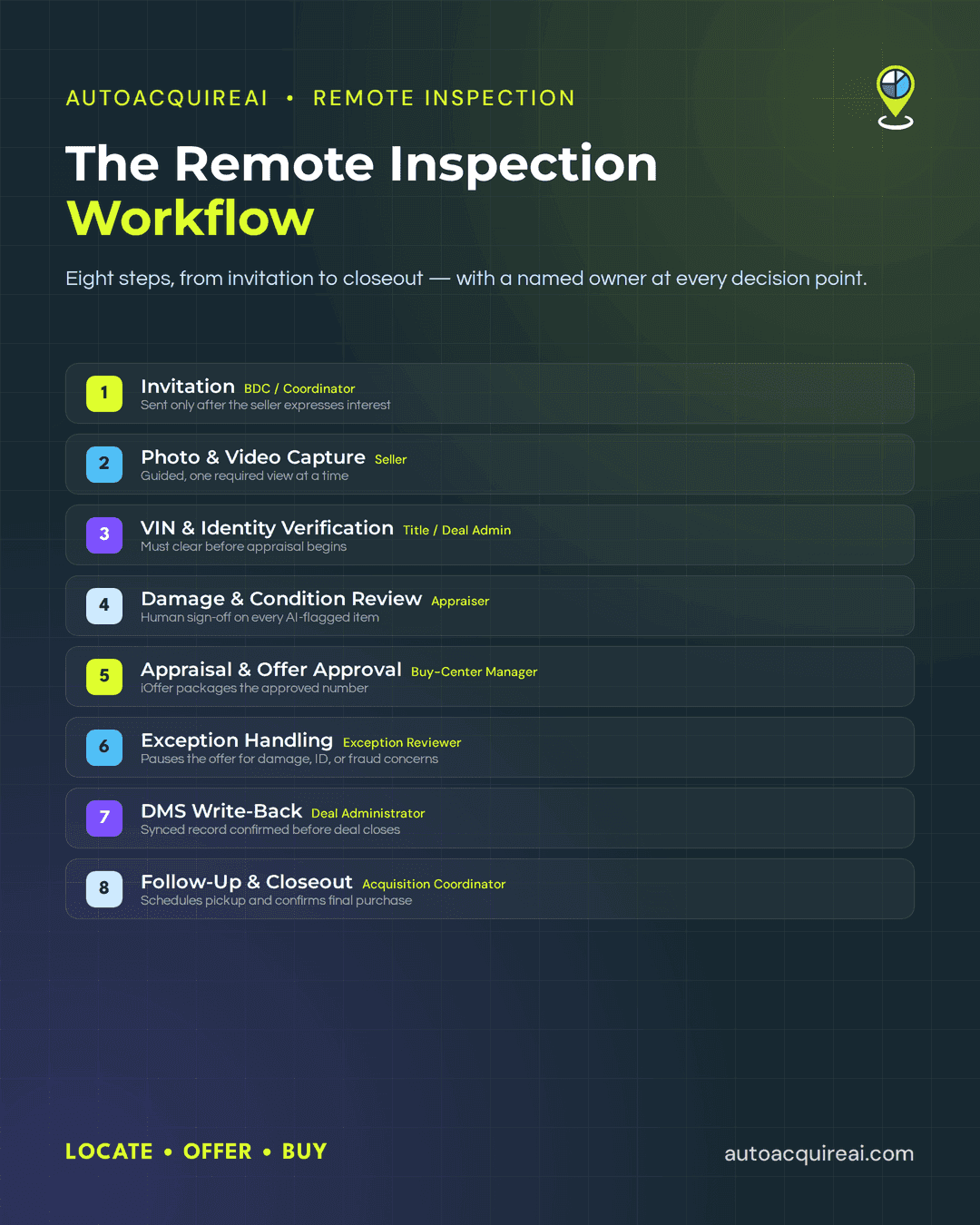
Auto Acquire covers more of the direct acquisition workflow. AVA contacts service drive customers and private-party owners to identify potential sellers. iOffer supports instant cash offers, while Remote Inspection collects condition information before an in-person appraisal. Auto Acquire states that its open API supports connections with CDK, Reynolds, and Dealertrack, allowing acquisition data to sync with existing dealership software rather than creating another system of record.
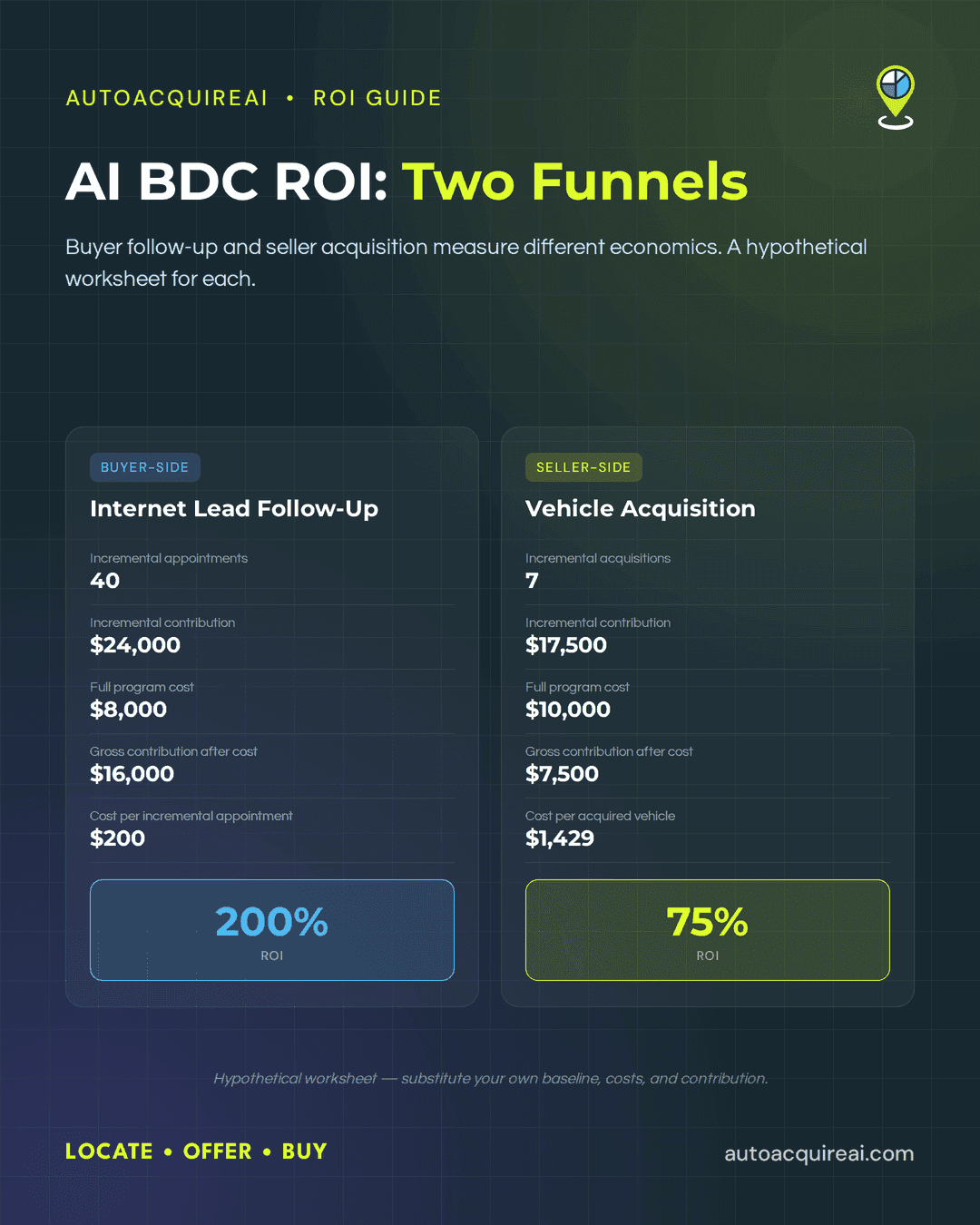
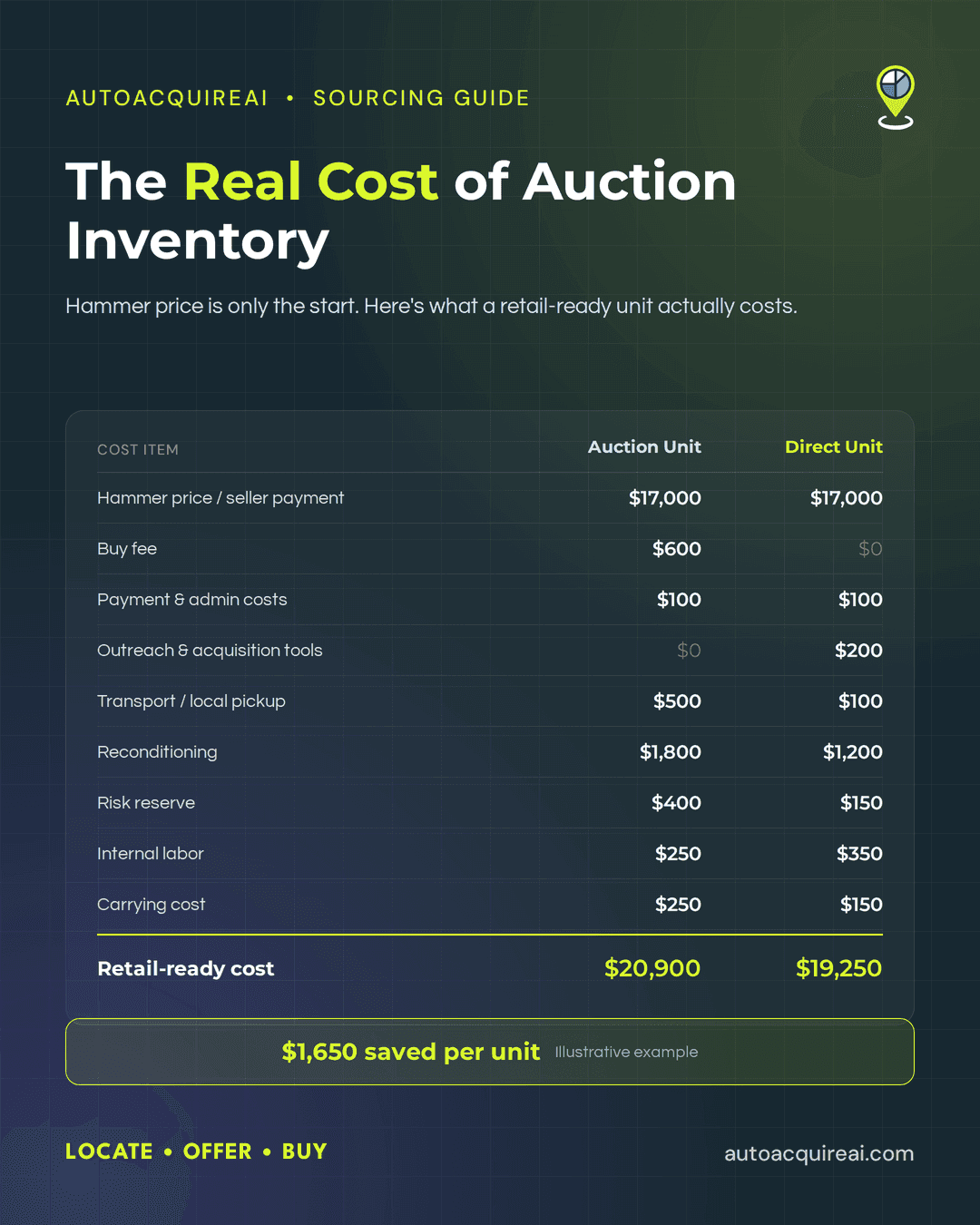
Auto Acquire complements the DMS rather than replacing it. The DMS continues to control inventory, accounting, and completed transaction records. Auto Acquire supplies seller opportunities and acquisition workflows before those vehicles enter inventory. Dealers can use that added supply channel to reduce reliance on auction lanes without eliminating auctions entirely.
Frequently asked questions
What does a dealer management system cost on average?
DMS cost is the total of subscription, implementation, data conversion, integration, training, support, and termination expenses rather than a single market-average fee. None of the four major providers publish list pricing, since each quote depends on module count, rooftop count, and negotiated terms. Comparing total contract cost, not the monthly subscription line, gives the dealership a more reliable budget and exposes expenses that a lower initial quote can hide.
How hard is it to switch DMS providers?
A DMS migration is the process of transferring dealership records, reconnecting integrations, validating financial data, and retraining staff on the new system. Most migrations run several months once a dealer accounts for data conversion, staff retraining, and rebuilding every third-party connection the old DMS supported. Securing export rights and running the old and new systems in parallel before cutover reduces launch disruption and catches missing or incorrect records before they hit the books.
Does a DMS replace inventory and acquisition tools?
A DMS is the system of record for dealership transactions, while inventory and acquisition tools support pricing, merchandising, appraisal, and vehicle sourcing. Auto Acquire operates before the completed purchase enters the DMS by helping dealers identify sellers, make offers, and collect condition information. Using both systems lets the dealer add acquisition capabilities without replacing its accounting and transaction records.
How does Auto Acquire integrate with an existing DMS?
A DMS integration is a connection that transfers approved vehicle, customer, and transaction data between dealership systems. Auto Acquire states that its open API connects AVA, iOffer, and Remote Inspection to CDK, Reynolds, and Dealertrack. The connection lets dealers move acquisition data into their existing DMS without creating a separate system of record.