

The Definitive Guide for Franchise Dealers and Dealer Groups
The most effective dealerships in the United States are no longer asking where to find inventory. They are building systems that control it.
The best technology for dealers to buy cars from customers is not a standalone tool. It is a fully integrated acquisition system that combines predictive data, real time pricing, intelligent communication, and operational execution into one continuous pipeline. Dealers who have adopted this approach are reducing acquisition costs, improving inventory quality, and creating a more predictable path to retail performance.
Across major automotive markets such as Chicago, Dallas, Los Angeles, and Atlanta, the shift is already underway. The dealers leading their regions are no longer dependent on auctions. They are sourcing inventory directly from consumers before those vehicles ever reach wholesale channels.
This is not a trend. It is a structural change in how inventory is acquired in the modern dealership.
Why Inventory Acquisition Has Changed in 2026
The current used vehicle market demands precision. Supply remains tight, competition is aggressive, and margins are earned before the vehicle is ever front line ready.
According to the latest market data, wholesale supply continues to compress while pricing remains firm.
For operators, the implication is clear. Every vehicle purchased at auction carries higher cost, more competition, and less control.
At the same time, nearly forty percent of used vehicle transactions are occurring between private parties.
That is where the opportunity exists.
The dealerships outperforming their markets are not reacting to inventory. They are moving upstream and acquiring vehicles directly from consumers with intention and consistency.
What Best in Class Acquisition Technology Must Deliver
A serious acquisition platform does not operate in pieces. It performs as a system.
There are five core functions that must work together in real time.
Seller identification
Dealers must be able to identify vehicle owners who are likely to sell before the market sees them. This requires predictive data built on ownership patterns, equity position, and local demand signals.
Real time pricing
An offer must be generated the moment a customer engages. That offer must reflect live market conditions, dealership inventory needs, and margin targets.
Immediate communication
Speed determines conversion. The difference between seconds and minutes changes outcomes. Customers expect engagement instantly.
Operational workflow
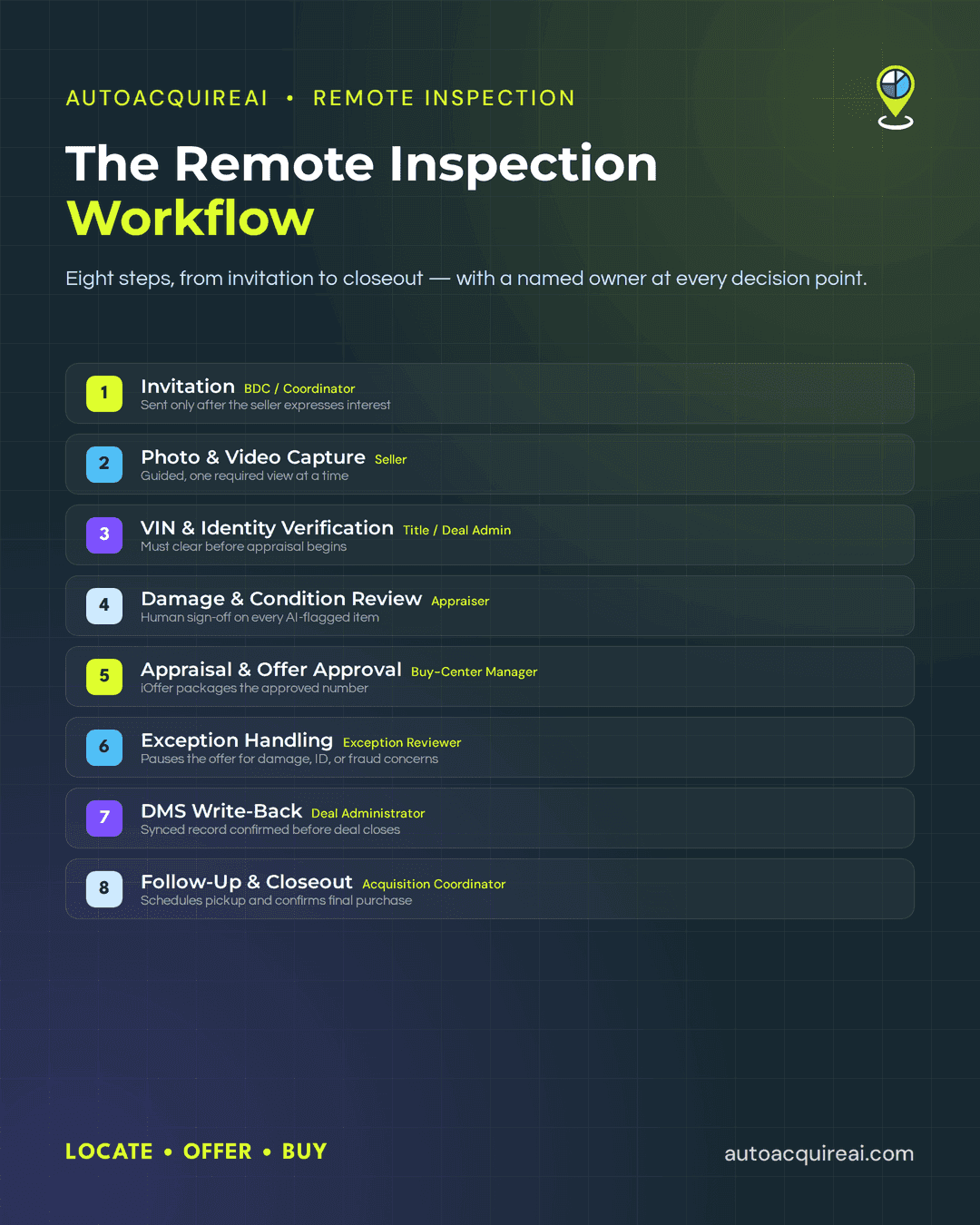
From condition capture to identity verification to deal structuring, the process must move without friction and without manual re entry.
Pricing control
Dealers must be able to adjust strategy based on inventory needs, geography, and market shifts without relying on a vendor.
If one of these areas fails, the entire pipeline slows down. When all five operate together, acquisition becomes consistent and scalable.
The Five Acquisition Channels Every Dealer Must Control
Technology is only as valuable as the channels it supports. A complete acquisition strategy covers five primary sources of inventory.
Service drive acquisition
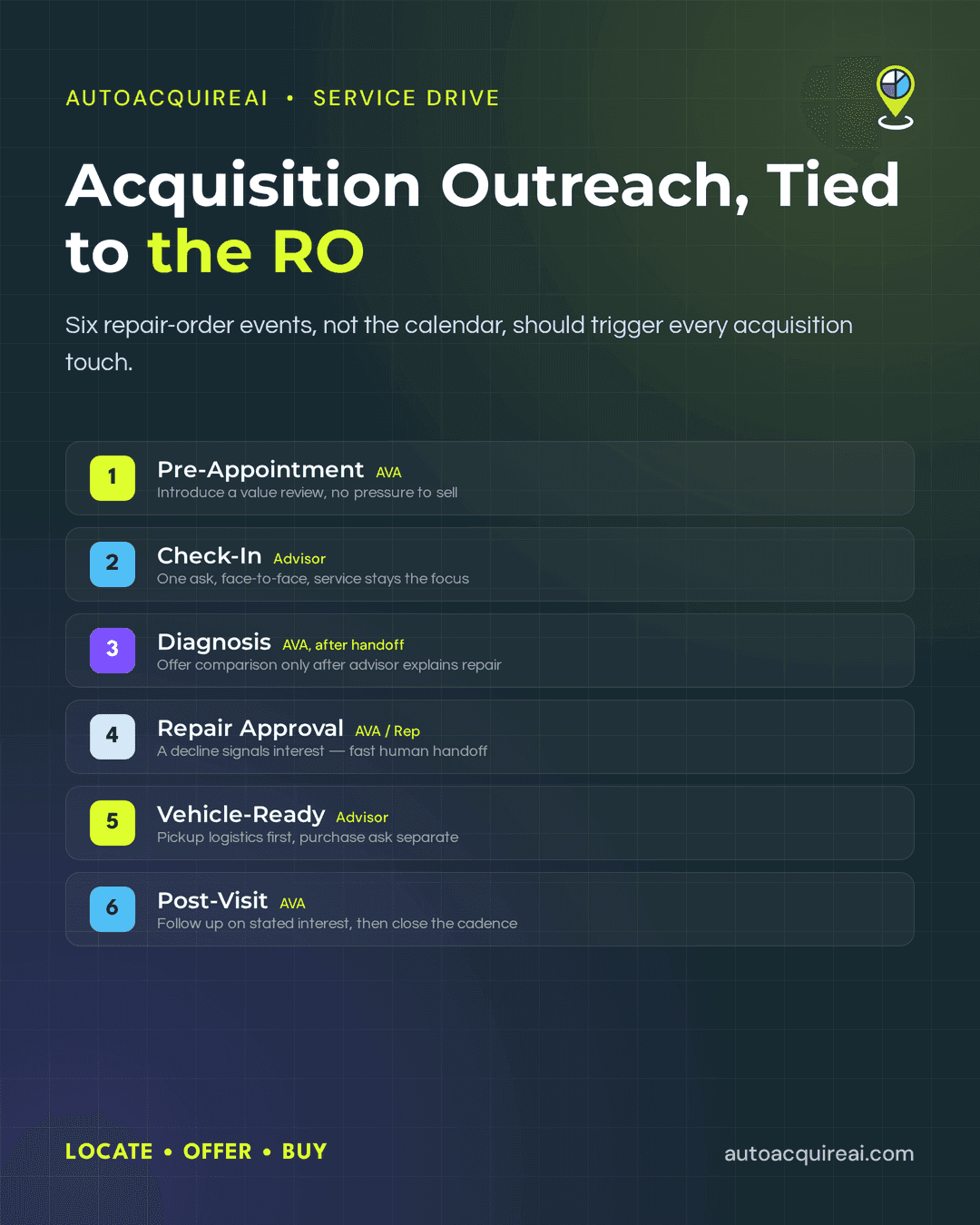
This remains the highest quality opportunity in the dealership. Customers are already present and often have equity.
Customer database and equity mining
Your CRM and DMS contain thousands of potential acquisition opportunities. The challenge is activating them with the right timing and messaging.
Dealer website and digital offers
Every dealership must convert online traffic into acquisition opportunities through a seamless instant offer experience.
Private party sourcing
Platforms such as Facebook Marketplace and local listings represent the largest volume of available inventory. The advantage comes from identifying and engaging the right vehicles early.
Auction and wholesale
Auctions still play a role, but they should no longer be the primary source of inventory for dealers focused on margin and control.
The most effective dealers operate all five channels within a single system, not across disconnected tools.
Why Most Dealership Technology Stacks Fail
Many dealerships attempt to solve acquisition by layering multiple tools. An instant offer tool, a pricing tool, a lead source, and a communication platform.
On paper, this approach appears complete. In practice, it creates friction.
Every gap between systems introduces delay, lost data, and reduced conversion. The dealership becomes responsible for connecting tools that were never designed to operate together.
The result is inconsistent performance.
A unified system eliminates those gaps. It allows the dealership to focus on strategy instead of managing technology.
How AutoAcquire AI Supports Direct to Consumer Acquisition
AutoAcquire AI was built specifically to solve the fragmentation problem in dealership acquisition.
Instead of operating as a collection of tools, it functions as a complete acquisition system.
It enables dealers to identify sellers before they enter the market, deliver real offers instantly, engage customers in real time, and manage the entire transaction from first interaction to final purchase within one platform.
The impact is measurable.
Dealers using a fully integrated acquisition system are seeing meaningful reductions in acquisition cost, improved inventory quality, and stronger retail performance.
More importantly, they gain consistency. Inventory flow becomes predictable instead of reactive.
The Business Impact of an Integrated Acquisition System
When a dealership transitions from auction dependence to direct consumer acquisition, four changes occur.
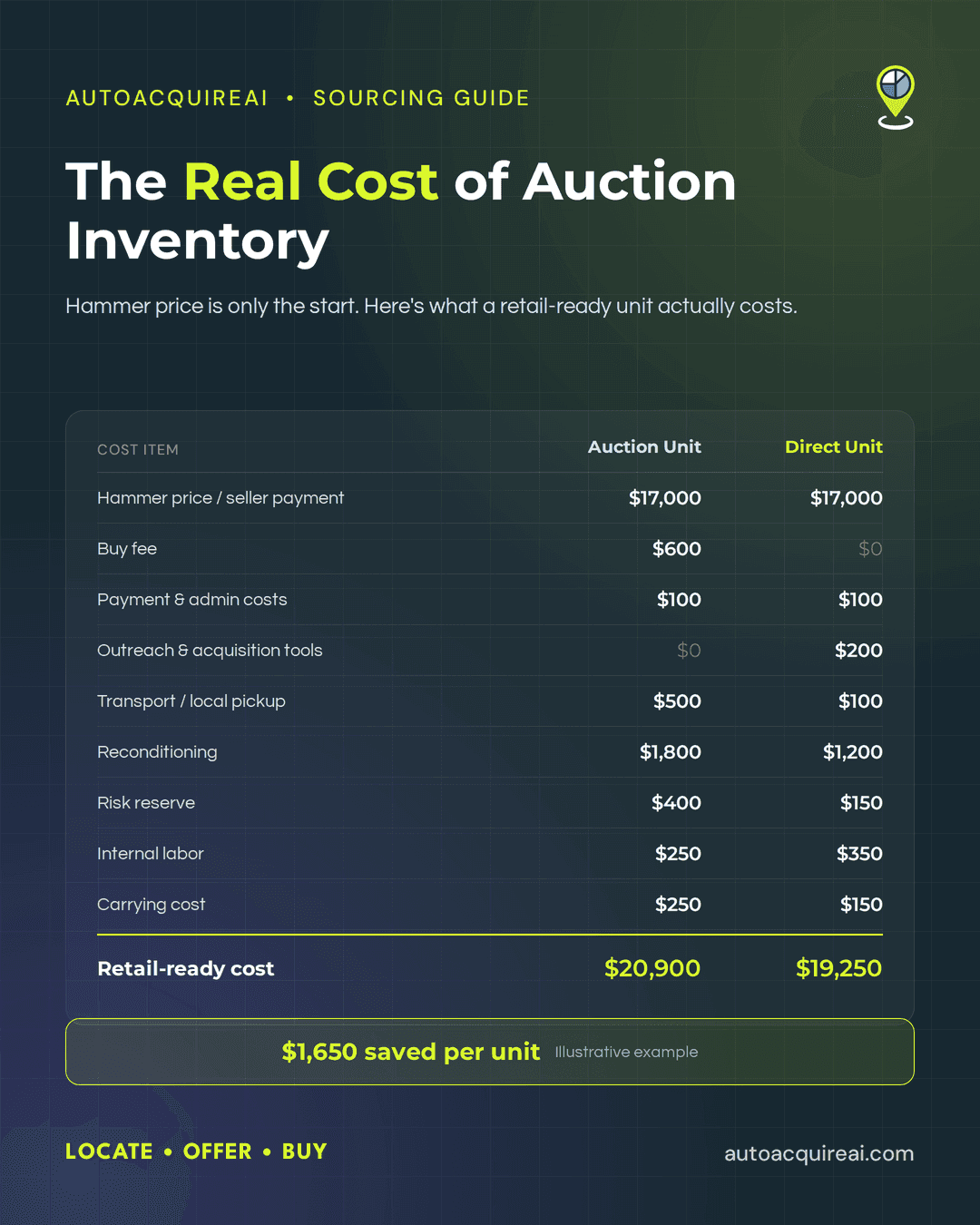
Lower acquisition cost
Eliminating auction fees and transportation reduces cost per unit significantly.
Higher quality inventory
Vehicles sourced locally from consumers often have clearer history and fewer unknowns.
Stronger retail margins
Directly sourced inventory is less commoditized and supports better pricing strategy.
Predictable inventory flow
Acquisition becomes a controlled system rather than a daily challenge.
These are operational advantages that compound over time.
How to Evaluate Acquisition Technology in Today's Market
For dealer principals, general managers, and used car directors evaluating technology, the questions are straightforward.
- Does the system generate opportunities proactively or only capture inbound traffic?
- Does pricing reflect real time market data and dealership strategy?
- How quickly does the system engage a customer?
- Can your team control pricing without relying on a vendor?
- Does the platform include identity verification and fraud protection?
- Can you track acquisition cost and performance in one place?
- Does it integrate directly with your existing systems?
If the answer is not yes across all areas, the solution is incomplete.
Frequently Asked Questions
What is the best way for dealerships to buy cars from customers?
The most effective approach is using an integrated acquisition system that combines data, pricing, communication, and workflow into one platform.
How much can dealers save by buying directly from consumers?
Dealers can significantly reduce acquisition costs by eliminating auction related expenses and improving efficiency across the process.
Why is direct to consumer acquisition growing?
Because it provides more control, better margins, and access to inventory before it becomes competitive in wholesale markets.
What is the biggest mistake dealers make with acquisition technology?
Relying on multiple disconnected tools instead of implementing a unified system.
The Bottom Line
Inventory is the foundation of dealership performance.
The dealers who lead their markets are not relying on chance. They are building systems that consistently deliver the right vehicles at the right time and at the right cost.
The best technology for dealers to buy cars from customers is the one that creates that system.
That is where the industry is headed. And for many dealers, that shift is already underway.
About the Author
Frank Knox serves as Chief Operating Officer of AutoAcquire AI. He brings decades of experience in vehicle acquisition, wholesale markets, and dealership operations. His work focuses on helping dealers build scalable acquisition systems that improve performance and profitability.
Sources and further reading
- Cox Automotive, Manheim Used Vehicle Value Index — March 2026 Trends (April 7, 2026)
- Cox Automotive, Q1 2026 MUVVI Report
- BCG, 2025 Dealer Survey on Used Inventory Pain Points
- VETTX, "Dealer Group Acquisition Strategies for 2025"
- AutoSuccess, "Navigating the Inventory Landscape" (2025)