
TL;DR
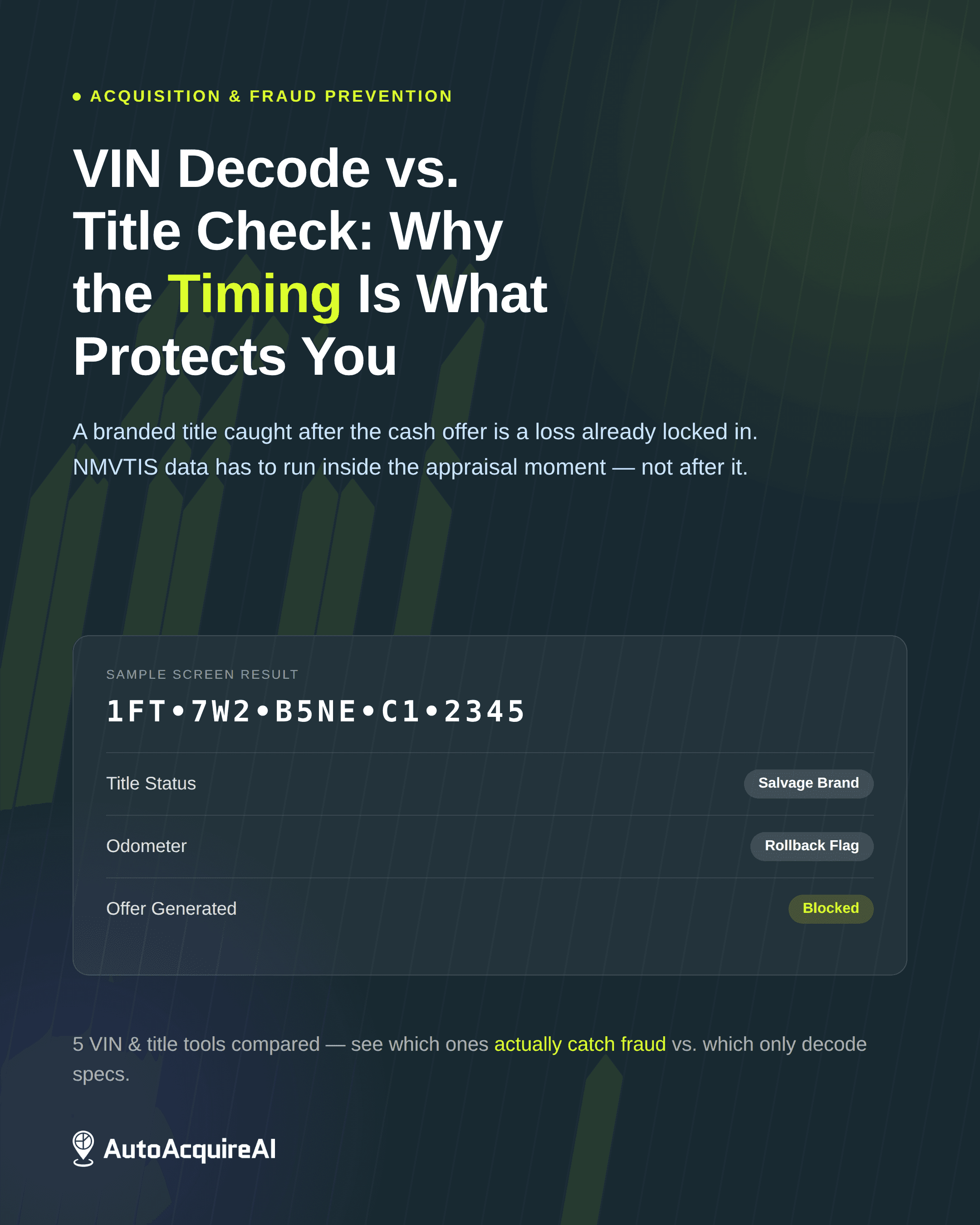
- A branded title or odometer rollback discovered after the cash offer is a loss already locked in. The VIN check has to run inside the appraisal and offer moment, not in a compliance file opened after purchase.
- Decoding a VIN and checking a title are two different acts. Manufacturer specs come from one source, while salvage brands, total-loss flags, and rollback readings come from the federally mandated NMVTIS layer.
- Five tools compared here: VinAudit, MarketCheck, ClearVin, Vehicle Databases, and NHTSA vPIC.
- NHTSA vPIC is decode-only and carries no NMVTIS data, so it cannot catch branded titles or rollbacks on its own. Pair it with a paid NMVTIS provider for the title and odometer layer.
Why VIN checks belong in the acquisition workflow, not the compliance file
A branded title discovered after a cash offer goes out is a loss the dealer already owns. The seller has seen a number, the appraisal has anchored the deal, and walking back the offer costs credibility and, often, the vehicle. The verification has to happen before the number exists, not in a post-purchase audit or a compliance folder reviewed weeks later.
Part of the problem is that "checking the VIN" and "checking the title" describe two different acts, and most acquisition teams only perform the first. Decoding a VIN returns manufacturer specs. The NHTSA vPIC API reads the make, model, model year, plant, and equipment data encoded in the seventeen characters. Nothing in its method list touches title status, salvage brands, odometer readings, or theft records. A team that runs a VIN through vPIC and moves on has confirmed the car is what the seller says it is, not that its title is clean.
Title and odometer history live in a separate federal system entirely. NMVTIS, built under the Anti-Car Theft Act of 1992, collects title brands, the latest reported odometer reading, and brand history from state titling agencies, insurance carriers, and salvage yards required to report into the system. Coverage is not yet complete. Per the Department of Justice, roughly 87% of the U.S. vehicle population is currently in NMVTIS, and more than half of states report data, so a clean result is not an absolute guarantee. Access runs only through approved NMVTIS data providers under contract with AAMVA, so a dealer cannot query it for free the way vPIC allows. Decode-only tools sit outside that data. Detecting a salvage title or a rollback requires an NMVTIS-sourced report, not a spec decode.
The gap opens at the exact moments acquisition teams move fastest. An instant cash offer generated in seconds rarely pauses for a manual title pull. A service-drive appraisal happens while the customer waits, and a private-party outreach conversation runs on speed to beat a competing offer. In each case, the incentive pushes toward showing a number quickly, and the title check gets deferred to intake paperwork after the deal closes. By then the branded title is the dealer's problem, priced into wholesale a year later.
Comparing VIN check and vehicle history providers
These five tools split on one question. Does a tool read the VIN's factory-assigned specs or pull the vehicle's title and odometer history from NMVTIS? A decode-only tool like NHTSA vPIC returns make, model, trim, and plant data, and nothing in its method list touches title brands, salvage records, or odometer readings. NMVTIS-backed providers such as VinAudit and ClearVin resell the federally mandated title and odometer layer that every state, insurer, and salvage yard is legally required to report. For fraud prevention, only the second group answers the question that matters at acquisition.
| Tool | Best For | Key Strengths | Potential Drawbacks |
|---|---|---|---|
| VinAudit | Low-cost, high-volume title and odometer triage | NMVTIS-approved; reports run roughly $3.49 to $9.99 and flag salvage, flood, rebuilt, and junk brands plus odometer rollbacks | Thin auction (Copart/IAAI) coverage and limited service records; no published bulk-API, DMS integration, or SOC-2 detail in available sources |
| MarketCheck | B2B market and inventory data feeds, not fraud checks | Large neutral dataset across US and Canada; enhanced VIN decode from $8 per 100 calls; Snowflake and Google Cloud delivery | No branded-title, salvage, or odometer-fraud flags; data scraped from public listings, so title verification is out of scope |
| ClearVin | Purpose-built dealer and auction VIN screening | NMVTIS title, salvage, and theft data at $2.50 per VIN with no monthly minimum; API access for embedding checks | Less third-party detail on data refresh cadence in available sources; a report vendor rather than a full workflow platform |
| Vehicle Databases | Developers building title checks into their own stack | 30+ API suite covering title brand, odometer, accident, lien, and auction data; OCR and plate-to-VIN lookups; white-label reports | No published pricing beyond a 15-credit trial; no SOC-2 or named CDK/Reynolds/Dealertrack integration in sources |
| NHTSA vPIC | Free pre-screen VIN decoding | Government-run, free, batch decode up to 50 VINs per call in XML, CSV, or JSON | Decodes factory specs only; carries no title, salvage, odometer, or theft data, so it cannot catch fraud on its own |
Dealers often pair tools rather than pick one: a free vPIC decode confirms the vehicle's identity, then the VIN goes to an NMVTIS provider for the title and odometer layer that carries the actual fraud signal. MarketCheck sits apart from the other four because its dataset serves pricing and inventory analysis rather than title verification, and treating it as a fraud check would leave a branded title undetected.
What each provider is best for
VinAudit fits dealers who need to triage many vehicles fast without spending on deep reports first. At roughly $3.49 per report drawing on the same NMVTIS title-brand and odometer-rollback data as pricier services, it answers the two questions that kill a deal—whether the title is branded and whether the odometer was rolled back—cheaply enough to run across a full service-drive queue.
MarketCheck suits dealers who want VIN data feeding their own valuation or inventory systems through an API rather than a report portal. Its Enhanced VIN Decoder starts at $8 per 100 calls and returns trim, equipment, and specs, which supports appraisal pricing. It carries no branded-title or salvage flags, so pair it with an NMVTIS-backed source for fraud checks.
ClearVin works best for high-volume service-drive and instant-offer screening where every appraisal needs a title check. Its dealer program runs $2.50 per VIN with an unlimited plan at $20 a month, and its API lets dealers embed salvage, brand, and odometer checks directly into an acquisition tool instead of running manual lookups on a separate site.
Vehicle Databases fits dealers building a custom acquisition stack who want title, accident, and auction history through one API. Its Vehicle History API returns title-brand flags, odometer records over time, and total-loss indicators, and its OCR and license-plate-to-VIN endpoints let staff pull a VIN from a windshield photo during a walkaround.
NHTSA vPIC is a free government decode tool, not a fraud-detection solution. It confirms make, model, year, and plant from the manufacturer's VIN assignment and handles batches up to 50 VINs per call, which makes it a solid free pre-screen. It carries no title, salvage, odometer, or theft data, so a dealer relying on vPIC alone cannot catch a branded title or a rollback. Use it to decode, then pair it with a paid NMVTIS provider for the fraud layer.
How AutoAcquire builds title verification into the offer, not after it
Most VIN check tools solve the wrong half of the problem. They tell a dealer what a car's title says but leave the timing entirely to staff. At AutoAcquire, we run the title check as part of generating the offer itself, so a branded title or odometer rollback surfaces before iOffer ever produces a number for the seller to see. The verification is a gate on the offer, not a report a dealer pulls afterward.
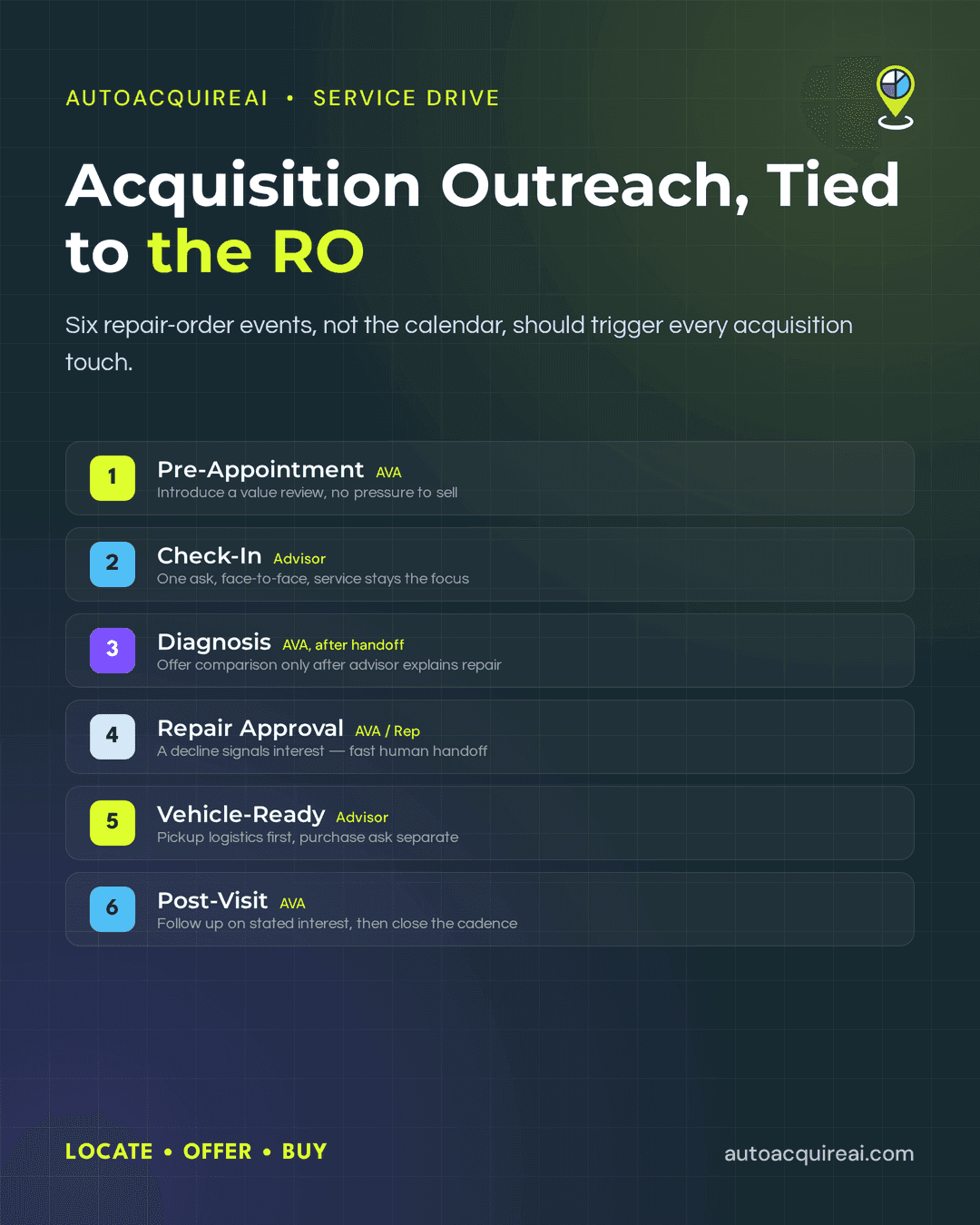
When AVA reaches out to a service-drive customer or private-party owner and moves toward an instant cash offer, the VIN runs against NMVTIS-backed title and odometer data before the offer logic finalizes a figure. A salvage brand, a flood record, or a later title showing fewer miles than an earlier one stops the clean number from generating. The dealer sees the flag at the moment of decision, not in a post-purchase audit after cash has changed hands and the car is already on the lot.
The cost of a failed check depends on when it happens. A ClearVin or VinAudit report caught after an offer is extended documents a loss that is already committed. The same NMVTIS data caught at offer generation prevents the loss entirely, because the dealer never quotes a retail-clean price on a branded car. The underlying title and odometer data draws from the same federal NMVTIS backbone across providers, though packaging, refresh timing, and supplemental sources can differ. The check fires automatically at the one moment when acting on it still counts.
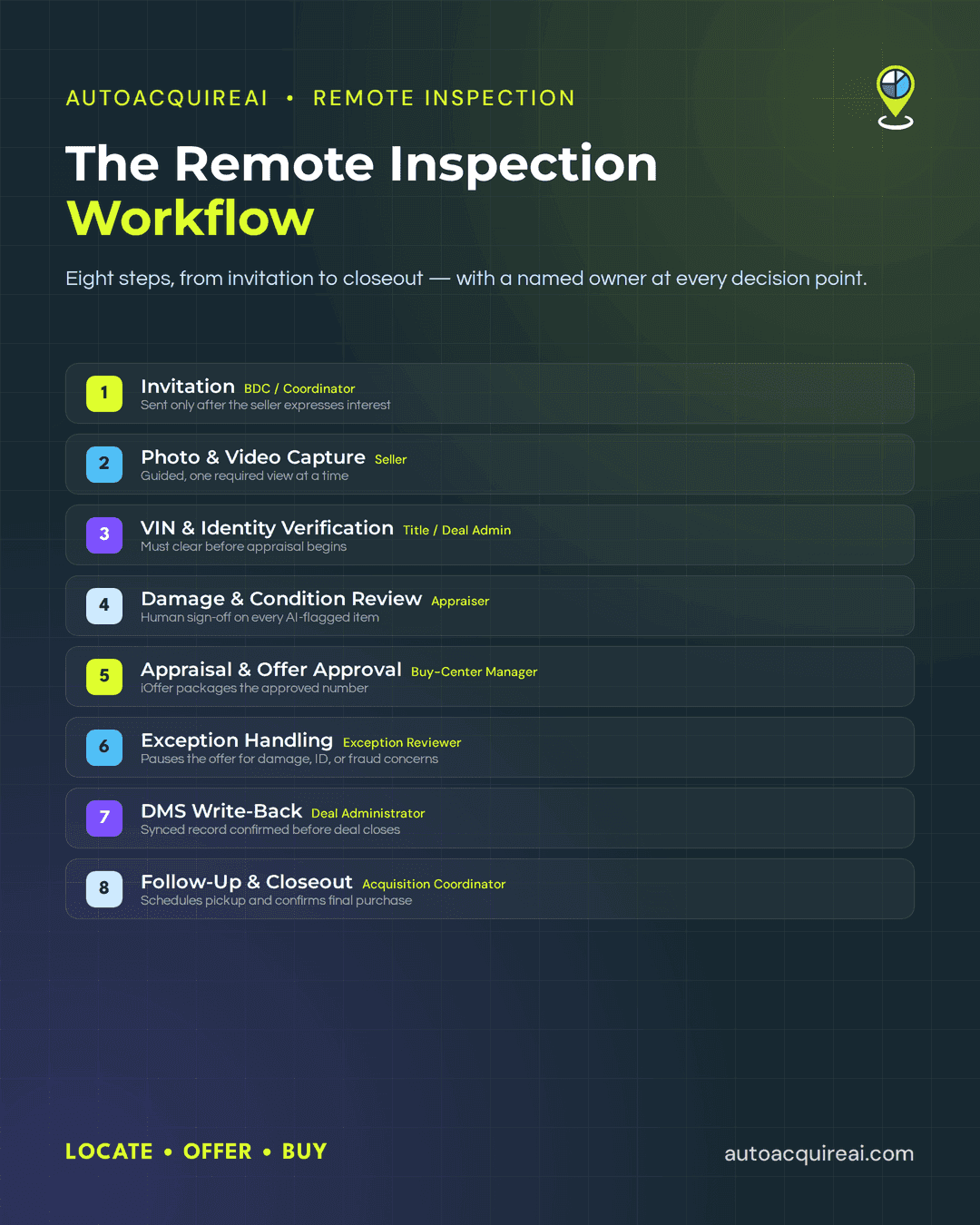
Once an offer clears verification and moves to purchase, we write the record back to the dealer's DMS. Integrations with CDK, Reynolds and Reynolds, and Dealertrack sync the vehicle record, title status, and offer detail so the acquisition lands in the same system the desk already runs. Staff do not rekey the VIN into a separate portal or reconcile a standalone report against the deal jacket by hand.
AutoAcquire does not replace the providers compared above, and it does not decode VINs to compete with them. We orchestrate the check and the offer together as one workflow. A dealer running high service-drive and private-party volume still relies on NMVTIS data underneath, but AutoAcquire decides when that data runs and what it blocks. For dealers building direct-to-consumer sourcing alongside their auction lanes, that ordering decides whether a fraud screen fires in time or merely documents a mistake after the money is gone.
Buyer's guide: matching a VIN check approach to your acquisition volume
Per-VIN cost decides which provider makes sense once a dealer knows how many vehicles it actually screens each month. A store running a handful of appraisals can pay retail single-report rates from VinAudit at roughly $3.49 to $9.99 per report and never notice the spend. A group screening every service-drive trade and private-party lead needs a volume tier, and ClearVin's dealer program holds the per-report cost at $2.50/VIN on both plans, with the annual plan dropping the base subscription from $20/month to $16.50/month, which lowers the marginal cost enough that checking every vehicle stops being a budget question. See ClearVin Dealer Pricing).
The second factor is whether the check runs by hand or fires automatically. Standalone report portals require a staffer to paste a VIN, wait for the report, and read it before an offer goes out. That step gets skipped under pressure, precisely when a branded title is most likely to slip through. Bulk APIs from MarketCheck or Vehicle Databases solve the throughput problem, but a raw API still needs a system around it to trigger the call at the right moment and act on the result.
Existing DMS dependencies shape the third decision. A dealer already committed to CDK, Reynolds, or Dealertrack wants title and odometer results written back to the deal record, not stranded in a separate browser tab. Report vendors alone do not close that loop.
Dealers running a few buys a week can live with manual lookups from a low-cost provider. Once acquisition volume climbs through service-drive and private-party channels, manual checks break down, and the verification step has to sit inside the offer trigger itself so a branded title surfaces before any number reaches the seller.
FAQ
What is the difference between a VIN decode and a title or history check? A VIN decode reads the manufacturer's build data from the 17-digit number, returning year, make, model, trim, and equipment. A title or history check pulls federal NMVTIS records covering title brands, salvage events, and the latest reported odometer reading. Decoding tells a dealer what the car is, while the NMVTIS check tells a dealer whether the title is clean and the mileage is real.
Which providers offer bulk or batch VIN checks, and what are the limits? NHTSA vPIC allows batch decoding of up to 50 VINs per call for free, but it returns specs only, not title or odometer history. ClearVin and Vehicle Databases publish dealer API and bulk plans that include NMVTIS title data, and MarketCheck offers custom bulk data feeds priced on request. Volume dealers need a paid NMVTIS-backed API, not vPIC's free batch cap.
How do VIN and title checks integrate with CDK, Reynolds, or Dealertrack? Standalone report portals require staff to run each lookup manually and rekey the result. Providers with APIs let a dealer's own system trigger the check, and an acquisition platform like AutoAcquire runs verification inside the offer flow and writes the result back to a DMS such as CDK, Reynolds, or Dealertrack automatically. Direct DMS sync removes the manual step between finding a branded title and recording it.
What does SOC-2 compliance mean for a dealer's data obligations? SOC-2 certifies that a vendor follows audited controls for handling customer and vehicle data securely. For a dealer running VIN and title checks through providers like ClearVin or Vehicle Databases, it reduces exposure when seller information moves through third-party systems. Confirming certification before connecting an API protects private-party seller data and limits the dealer's liability.
Does AutoAcquire replace a dealer's VIN check provider? No. AutoAcquire orchestrates verification and offer logic together, triggering an NMVTIS-backed check at the moment of offer generation rather than decoding VINs itself. It works alongside an existing provider to catch branded titles and rollbacks before a number reaches the seller.