Vehicle Condition Reports vs. Remote Inspection for Dealers: ACV, OPENLANE, Manheim, and AutoAcquire
TL;DR
- Auction buyers can compare documented vehicle condition before bidding: ACV Auctions publishes inspector-collected photos, OBDII scans, engine audio, and undercarriage images; OPENLANE adds inspector-reviewed AI damage findings and mechanical cautions; Manheim displays condition information and photos on its vehicle details page.
- Auction reports standardize condition disclosures across listings. Dealers must check each marketplace’s current dispute terms before treating a report as buyer protection.
- AutoAcquire Remote Inspection supports dealer-requested condition reviews for service-drive customers and private sellers. AutoAcquire's product page places inspections alongside iOffer cash offers and AI voice outreach in a direct-acquisition workflow; the dealer, not an auction operator, sets the offer.
- A direct purchase does not incur an auction buyer fee, but it can carry inspection, outreach, and transaction costs. Dealers also manage the appraisal, offer, and condition risk. Remote inspection does not guarantee a vehicle’s condition.
- The decision turns on the purchase channel. Auction reports fit lane bids, while direct remote inspection fits dealer-originated offers.
Why condition evidence decides sight-unseen purchases
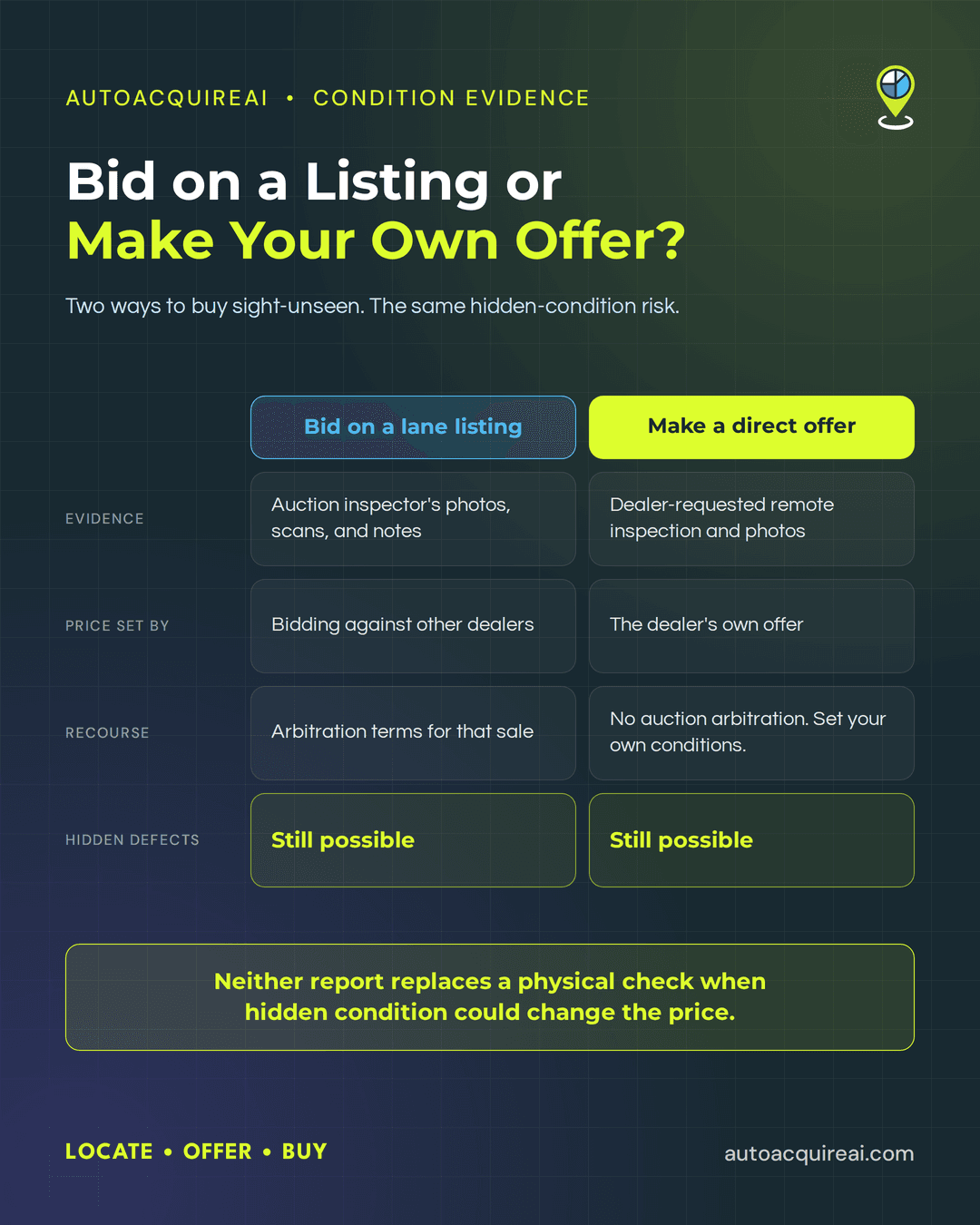
Condition evidence helps dealers estimate reconditioning costs before a sight-unseen purchase. AI-guided smartphone inspections can collect evidence without an initial visit, but neither a remote report nor an auction listing replaces a physical check when hidden condition could change the offer. Drive-through scanning systems are a separate, on-site inspection method. Photos and a report can reveal visible damage, but they cannot rule out every defect a hands-on appraisal might find. The dealer needs to know who recorded the condition, how they inspected the vehicle, and what recourse applies if the vehicle arrives in a different condition.
Auction reports support bids on vehicles listed through ACV Auctions, OPENLANE, and Manheim. Each listing’s documented inspection method and disclosures determine what a buyer can assess before bidding. Any dispute depends on the applicable arbitration and buyer-protection terms, not on the report alone. Dealers buying through a lane should read those terms alongside the condition evidence before setting a maximum bid.
AutoAcquire Remote Inspection serves a different purchase path. It supports condition review within a dealer’s service-drive or private-seller acquisition workflow, where the proposed workflow uses inspection evidence for an iOffer and AVA seller outreach. The dealer controls the offer and seller relationship, but the remote inspection does not provide an auction arbitration backstop or guarantee that the vehicle has no hidden defects. For either path, the useful comparison is how the inspection happens, who produces the evidence, what protection applies, and how the evidence informs the purchase decision.
ACV Auctions: review listing evidence before bidding
ACV Auctions sends inspectors to vehicles on the seller's lot and publishes interior and exterior photos, tire and odometer views, an OBDII scan, and engine audio. Its APEX engine recording lets off-site buyers listen before bidding, while Virtual Lift supplies a high-definition undercarriage image. An engine recording or image helps a dealer investigate a concern; neither proves the absence of an intermittent mechanical defect.
ACV says its condition reports draw on vehicle inspections and transaction data, but the buyer still needs to read the actual listing. ACV also provides a separate Market Report with a VIN-based price range; pricing guidance is not a condition guarantee. ACV's buyer page does not specify how AI contributes to any particular damage finding, so dealers should not assume that every report includes AI-verified damage detection.
ACV's buyer page advertises 10-day arbitration protection at no charge and optional buyer-assurance extensions. That statement establishes a marketed window, not automatic coverage for every defect. Before bidding, check the sale's current arbitration rules, exclusions, claim trigger, and whether added protection was purchased. Photograph and test the vehicle promptly on arrival so any eligible discrepancy can be documented in time.
OPENLANE: match listing disclosures to sale terms
OPENLANE's condition-report guide describes human inspections enhanced by AI. Buyers can review a condition score, photos, inspector notes, mechanical cautions, OBD2 codes, available test-drive observations, and engine audio. OPENLANE says an experienced inspector reviews AI-detected exterior damage. Its Black Book estimate and predictive pricing guide the bid, but neither verifies a vehicle's condition or guarantees its resale value.
OPENLANE describes its As Described Guarantee as arbitration rights for certain covered items omitted from a condition report, not a blanket warranty. The company's condition-report guide states a seven-day claim window from purchase, or from delivery when using OPENLANE transport, and describes an optional Extended Guarantee of 14 days under the corresponding transport conditions. Coverage and deadlines depend on the purchase and protection selected. Dealers can submit a claim with photos, video, and documents in the mobile app; an inspector still needs to assess the car on arrival.
Manheim: check reports and sale announcements
Manheim's vehicle details page puts listing images and bidding controls together for remote buyers. Condition information and sale announcements help a dealer set a bid ceiling, but a posted grade should not be treated as a mechanical inspection. Unlike a seller standing at the physical lane, an off-site bidder must decide whether the available report and photos cover the risks that would change the price.
Manheim's Post-Sale Inspection policy describes a separate, purchased mechanical, structural, and flood check on eligible vehicles. A vehicle that passes can carry a seven- or 14-day guarantee for inspected components, depending on the product bought. The policy excludes all-electric vehicles and vehicles sold as-is, among other categories, and requires a qualifying PSI claim within the purchased guarantee period. Manheim also publishes additional digital-buyer protection for qualifying Ready Logistics delays. Neither a condition grade nor PSI covers every component; read the sale announcements and the applicable policy before bidding.
AutoAcquire Remote Inspection: evidence built for a direct offer, not a lane
AutoAcquire Remote Inspection lets a dealer request and review a remote condition check for a service-drive customer's or private seller's vehicle. AutoAcquire's product page shows vehicle photos, a damage map, flagged items, estimated repairs, and a market-value illustration. The same page places iOffer cash offers and AI voice outreach alongside inspection in its acquisition workflow. A dealer can review the evidence and set an offer without first bidding against other dealers, but must still decide when a hands-on check is required.
The inspection report informs a purchase decision, but AI-assisted assessment does not guarantee a vehicle’s condition or value. AutoAcquire does not provide an auction operator’s arbitration network for a direct purchase. Dealers need to set offer conditions and check material concerns before completing the purchase. An auction policy might offer a qualifying buyer recourse that a direct purchase does not provide.
For a private-party lead, a dealer can request photos and review flagged cosmetic issues before setting an iOffer amount or asking for an in-person check. AVA supports seller outreach in AutoAcquire's acquisition workflow, while the dealer owns the offer decision. The product page shows how these functions sit together; it does not establish that Remote Inspection catches hidden defects better than specialist inspection systems.
Comparison table
Use the table to compare evidence and recourse, not to infer that every listing has identical inspection coverage. Protection depends on the vehicle, sale terms, and any optional coverage purchased.
| Vendor | Best For | Inspection Method | Verified Condition Evidence | Protection Limits | Off-Site Workflow Tradeoff |
|---|---|---|---|---|---|
| ACV Auctions | Off-site bids on dealer auction listings | ACV inspector examines vehicles on the seller's lot | Photos, OBDII scan, engine audio, and available Virtual Lift undercarriage image | ACV advertises 10-day arbitration protection; eligibility and optional extensions depend on terms | Bid on an existing listing; inspect promptly on delivery. |
| OPENLANE | Digital wholesale buying with detailed condition records | Human inspector with AI-assisted damage assessment | Photos, scores, mechanical cautions, OBD2 findings, and available test-drive notes | As Described Guarantee covers eligible undisclosed items; seven-day standard window and optional extended coverage, subject to sale terms | Check listing eligibility, transport conditions, and purchased protection. |
| Manheim | Buyers comparing physical-lane and digital inventory | Listing images and condition data; separate, optional post-sale inspection on eligible vehicles | Vehicle details and images; PSI checks defined mechanical, structural, and flood items | Passed PSI carries seven- or 14-day guarantee for inspected components, if purchased and eligible; check sale-specific rules | Check announcements and whether PSI is available before setting a remote bid. |
| AutoAcquire Remote Inspection | Dealer-originated service-drive and private-seller offers | Dealer-requested remote condition capture and review | Product-page example shows photos, flagged issues, a damage map, and repair estimates | No auction arbitration for a direct purchase; dealer sets inspection and offer conditions | Dealer controls seller contact and offer, but must verify material defects before purchase. |
When an auction condition report is enough
An auction report can support a remote bid when it covers the defects that would change the dealer's maximum price. ACV supplies engine audio and undercarriage imagery; OPENLANE publishes inspector-reviewed damage findings and available diagnostics; Manheim buyers can evaluate listing evidence and, for an eligible purchase, add post-sale inspection. None replaces checking disclosures and claim eligibility for the individual vehicle.
Arbitration coverage depends on the auction’s current terms, not on the report alone. Before bidding, dealers should check the sale status, disclosures, claim deadline, and exclusions for that vehicle. If an uninspected area could change the purchase decision and the policy would not cover it, the dealer needs more evidence or should pass.
When direct remote inspection plus an offer workflow fits better
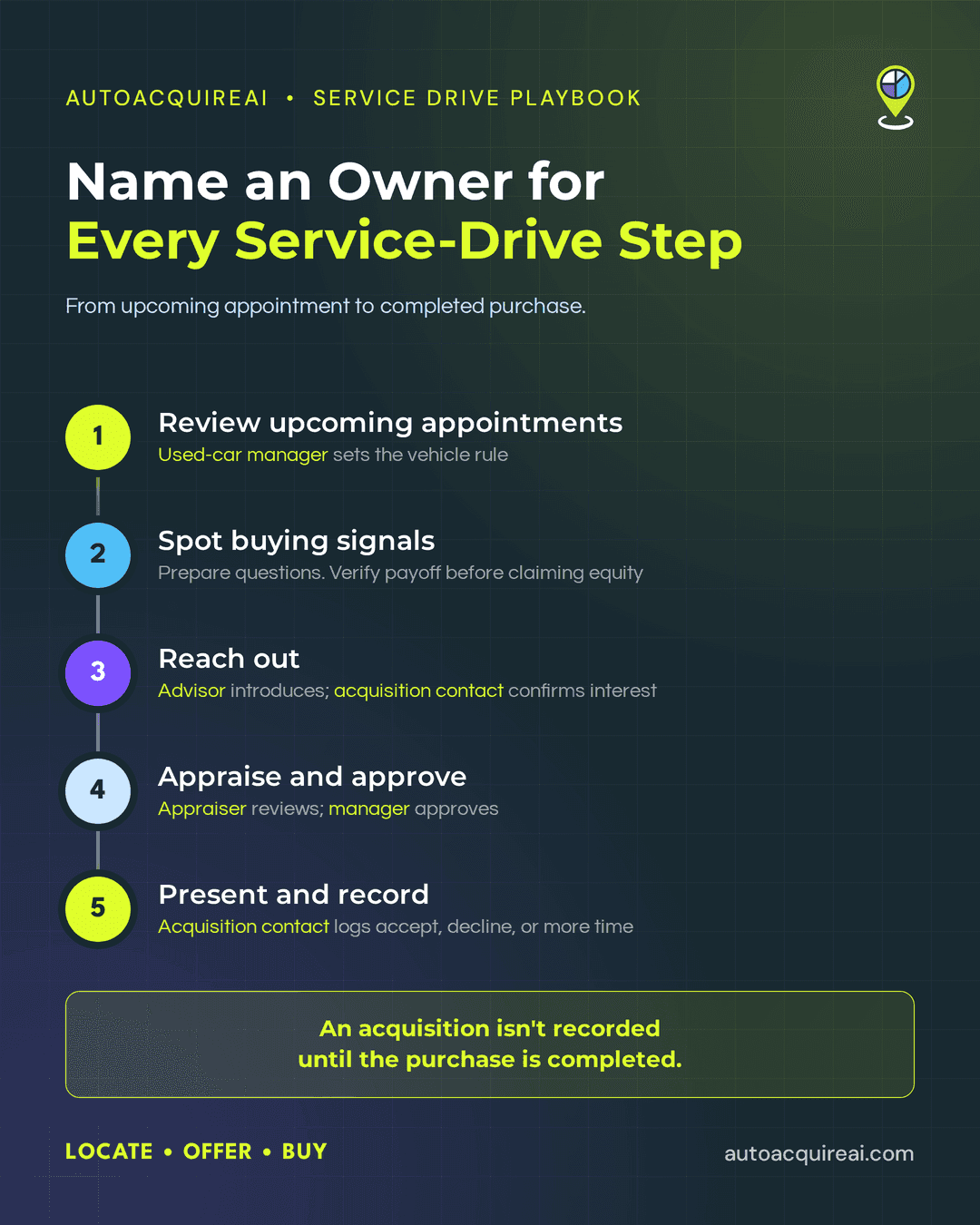
Dealers sourcing from service-drive customers or private sellers need condition evidence for their own offer, not an auction bid. AutoAcquire Remote Inspection lets staff request and review the vehicle remotely; iOffer supports a cash offer, and AutoAcquire's AI voice outreach can continue the seller conversation. A used-car manager still decides whether photographed damage justifies a price adjustment or an in-person inspection.
The direct workflow gives the dealer control over seller contact and offer timing. For example, a used car manager can request a remote inspection from a private seller before deciding what to offer. The inspection supports that decision, but it does not guarantee the vehicle’s condition or replace the dealer’s appraisal judgment.
An auction report remains the better fit when the dealer buys through a lane and needs to evaluate that listing under the auction’s disclosure and dispute terms. AutoAcquire does not provide an auction arbitration backstop. The dealer must decide what further checks to require before committing to a purchase.
FAQs
- Does an auction condition report function as a warranty? No. A condition report documents the vehicle for bidding, but dealers should not treat it as a promise that the vehicle has no undisclosed defects. The applicable sale terms determine any buyer protection.
- What happens if a vehicle does not match its report? Inspect it on arrival and document the discrepancy immediately. ACV advertises a 10-day arbitration period; OPENLANE describes seven-day As Described protection for eligible purchases and extended options. Manheim's PSI guarantee applies only to inspected components on eligible vehicles when the product is purchased. The sale-specific policy controls whether any claim qualifies.
- Can AutoAcquire Remote Inspection replace an in-person appraisal entirely? AutoAcquire Remote Inspection can support an offer for a service-drive customer or private seller, but remote evidence cannot establish every mechanical or hidden condition. Dealers can make a remote offer subject to a physical check when those risks affect the price.
- Does Remote Inspection provide auction-style dispute protection? AutoAcquire Remote Inspection is not an auction arbitration service. Any other protection or dispute terms need verification against AutoAcquire’s official documentation. In a direct purchase, the dealer sets the offer and must agree with the seller on how any condition discrepancy will affect the transaction.
Conclusion
A dealer bidding on someone else's listing needs the report, disclosures, and arbitration terms for that sale. A dealer buying a service-drive or private-seller vehicle can use AutoAcquire Remote Inspection to gather evidence for an iOffer, then set its own final inspection conditions. Neither path eliminates hidden-condition risk, but each gives the manager a different way to decide what to buy and when to commit.