

TL;DR
Private party vehicle acquisition cuts auction dependency and improves dealership margins by sourcing directly from individual sellers. AutoAcquire's AVA agent automates personalized outreach to private sellers at scale, removing manual BDC work and increasing lead volume without adding headcount.
AutoAcquire's iOffer delivers instant cash offers that convert private sellers faster by removing the traditional back-and-forth negotiation delays that cause seller drop-off. Dealers combining service drive acquisition with private party channels report significantly lower cost-per-unit compared to auction-only strategies.
Private party sourcing puts dealers in direct contact with sellers before a vehicle ever hits the wholesale market, which is where the margin advantage actually comes from.
Opening Story
Private party acquisition has become the most reliable way for dealers to escape shrinking auction margins, and AI outreach is what finally makes it scale. Auction floors that once guaranteed inventory now squeeze dealer margins to razor-thin levels. Post-2020 supply chain disruptions created permanent scarcity, pushing cost-per-unit acquisition through the roof. Dealers who relied on wholesale channels suddenly face a stark choice. Accept compressed profits or find new inventory sources.
Private party sellers offer the clearest path forward. Individual consumers selling their vehicles represent millions of untapped units at lower acquisition costs than auction lanes. These sellers bypass wholesale markups and transport fees, delivering higher gross potential to dealers willing to reach them directly.
A BDC agent making manual calls to Facebook Marketplace sellers or Craigslist posters can handle maybe twenty outreach attempts per day. Each conversation requires research, personalization, and follow-up sequences that eat hours of expensive labor time. Most dealers abandon private party sourcing because the math doesn't work with human-only processes.
AutoAcquire deploys voice agents that contact hundreds of private sellers daily with personalized offers, generating qualified leads without additional headcount.
What Is Private Party Vehicle Acquisition?
Private party vehicle acquisition means dealers source used inventory directly from individual sellers instead of relying on auctions or wholesale channels. This approach eliminates auction fees, transport costs, and wholesale markup that compress margins at traditional sourcing venues.
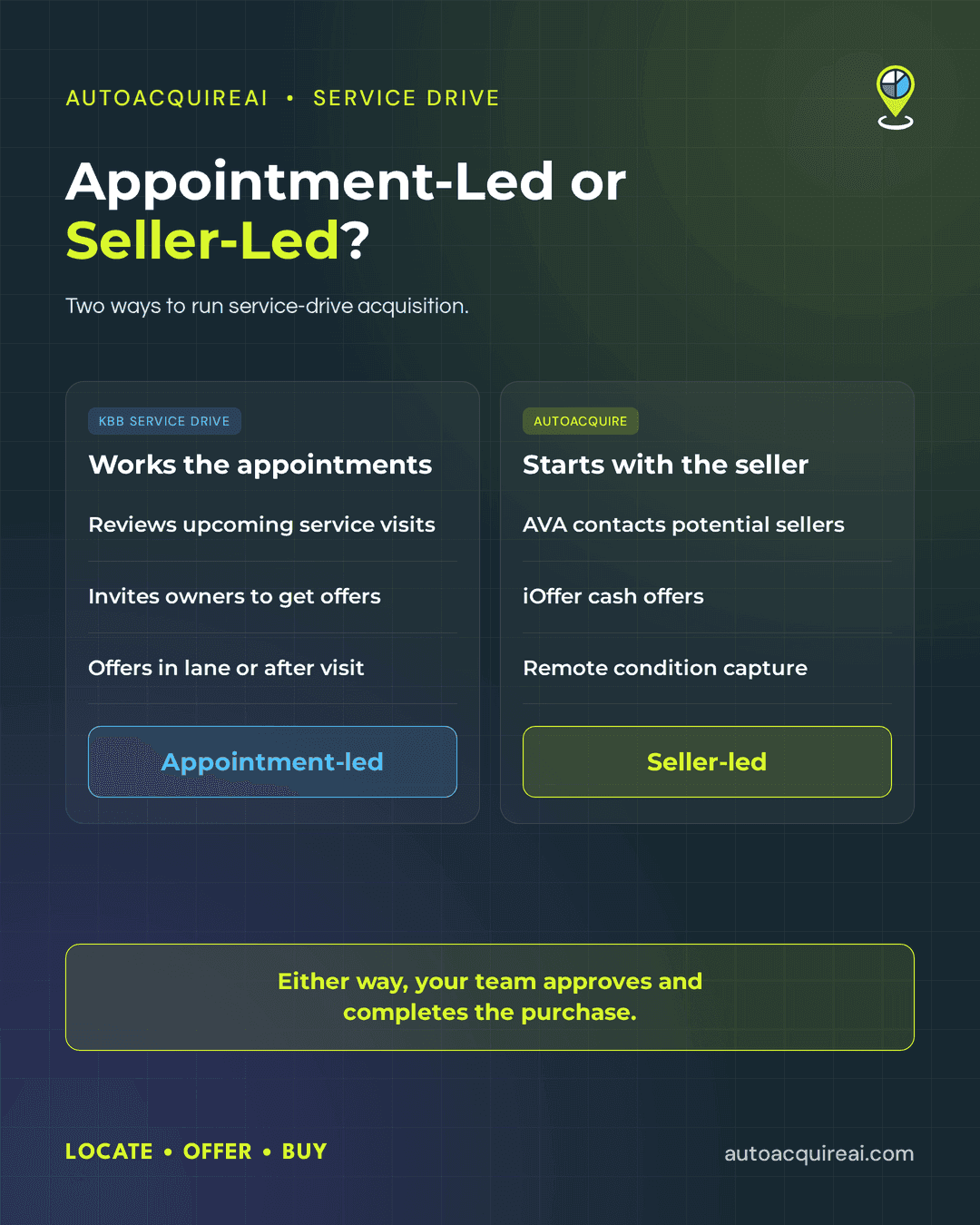
Dealers tap multiple channels for private party inventory. Service drive customers represent the most accessible opportunity since these vehicle owners are already on the lot for maintenance or repairs. Online marketplace outreach targets sellers posting on Facebook Marketplace, Craigslist, and other classified platforms. Inbound leads come from sellers responding to dealer advertisements or website forms.
Dealers turned to this sourcing method as post-2020 inventory scarcity and climbing auction floor costs made traditional channels increasingly expensive and unreliable.
Why Dealers Are Shifting to Private Party
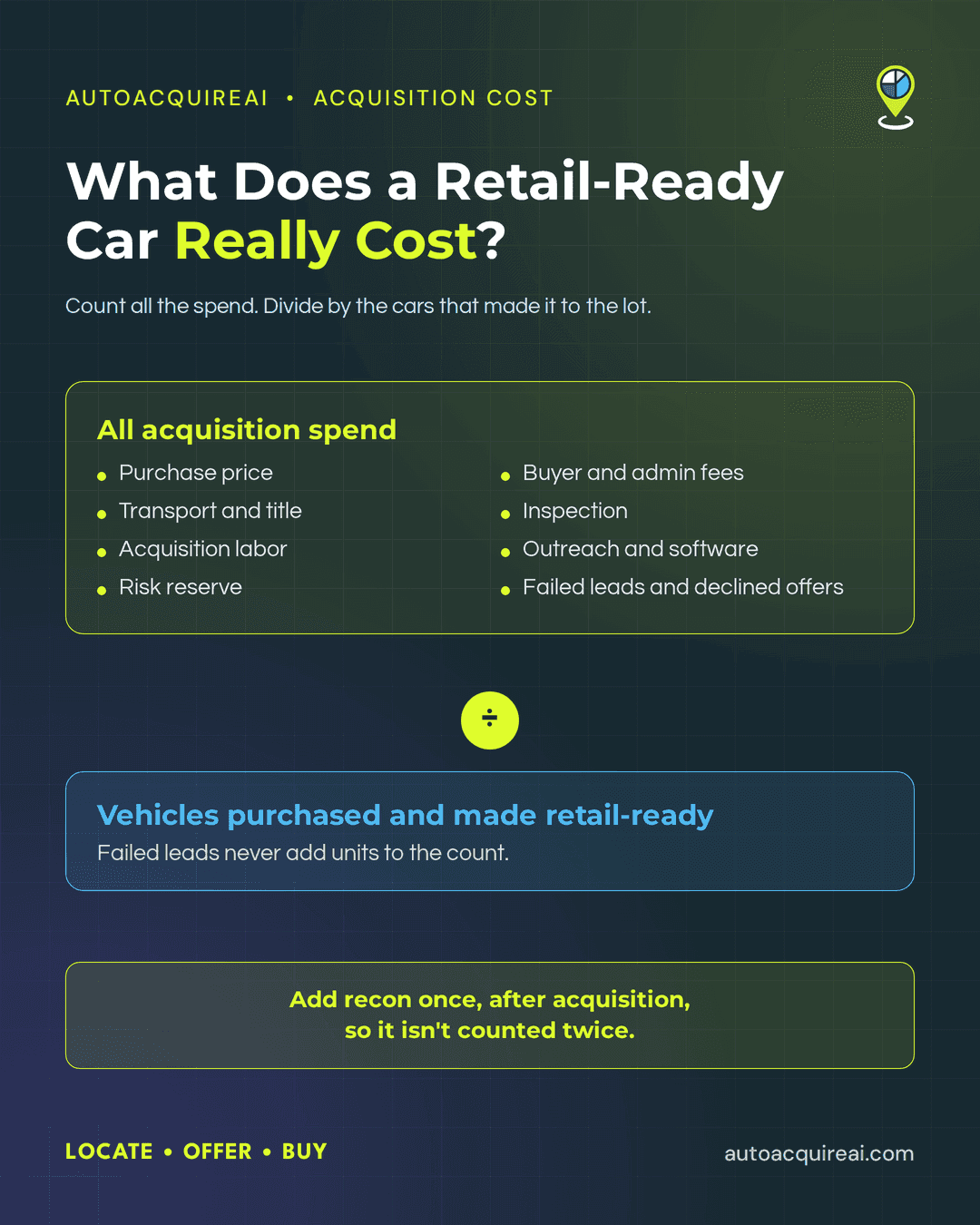
Auction cost-per-unit continues rising as competition for limited wholesale inventory intensifies. Private party acquisition typically delivers lower per-vehicle costs since dealers negotiate directly with sellers without intermediary fees or transport charges.
Direct-sourced vehicles offer higher gross profit potential compared to auction purchases. Dealers can inspect vehicles before purchase, avoid condition surprises, and structure deals based on actual vehicle condition rather than auction descriptions.
Building relationships with local private sellers creates repeat business opportunities that extend beyond single vehicle transactions.
The Best Private Party Vehicle Acquisition Tools for Dealerships
Most dealerships source inventory from private sellers manually, limiting their reach. Manual BDC outreach consumes headcount without guaranteed results. Auction dependency exposes dealers to volatile pricing and limited supply.
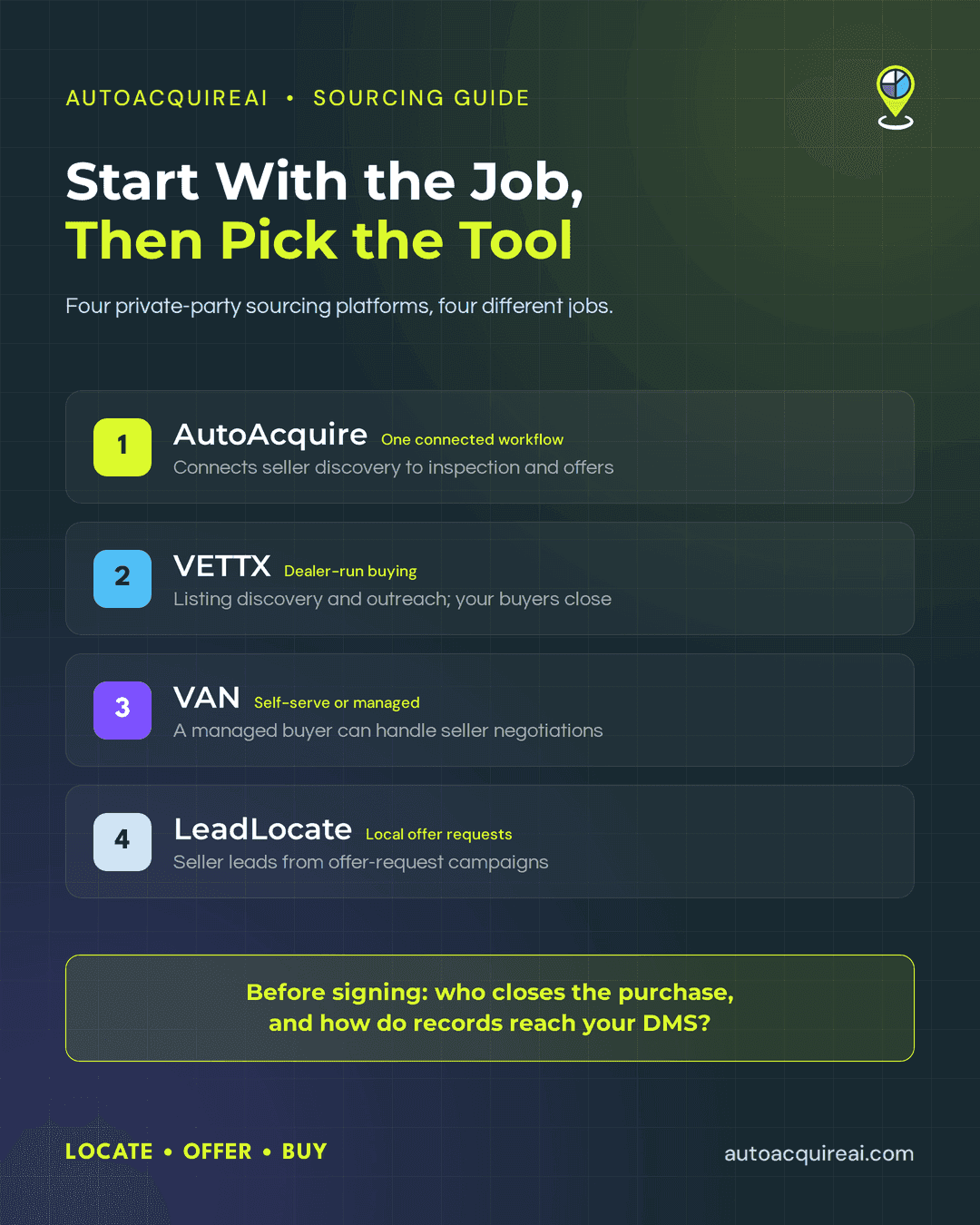
1. AutoAcquire
Quick overview. AutoAcquire delivers AI-powered private party and service drive acquisition through three core products. AVA agent for automated seller outreach, iOffer for instant cash offers, and Remote Inspection for AI-guided condition reports. We integrate with CDK, Reynolds, and Dealertrack while offering open API access for custom workflows.
Best for: Dealers who want a unified platform for both private party sourcing and service drive acquisition. Dealers wanting to automate BDC outreach while maintaining personalized seller engagement will find the AI approach particularly effective.
Pros. AVA eliminates manual outreach by automating personalized communications to private sellers at BDC scale without additional headcount. iOffer accelerates conversions by delivering instant cash offers that reduce seller drop-off during the consideration phase. Remote Inspection captures detailed condition data before vehicles arrive on the lot, improving pricing accuracy and reducing reconditioning surprises. We unify service drive and private party channels in a single workflow, eliminating the need for separate tools. Native DMS integrations with CDK, Reynolds, and Dealertrack ensure seamless data flow into existing dealer operations.
Cons. The platform optimizes for acquisition workflows rather than standalone physical inspection use cases. Active market coverage currently concentrates in select metros including Orlando/Tampa, Charlotte, Chicago, Dallas, and Phoenix, limiting availability for dealers in other regions.
Pricing. Pricing requires direct sales contact, though the 60-day free trial allows dealers to validate ROI before committing to a contract.
2. VETTX
VETTX pulls private party listings from Facebook Marketplace, Craigslist, and other consumer sites into one feed dealers can search. It solves the discovery problem, which is real. Finding sellers across a dozen scattered sites eats hours of a buyer's day, and VETTX collapses that into a single search surface.
Quick overview. VETTX is sourcing software that scrapes private party listings from multiple online marketplaces and consolidates them for dealership buyers. The platform earns frequent mentions in vehicle sourcing comparison content, which keeps it visible to dealers researching acquisition tools.
Best for: Dealers who already have a buyer or BDC agent and want a faster way to find private party inventory across scattered marketplaces. VETTX fits dealers treating aggregation as a research shortcut, not a replacement for their outreach team.
Pros. VETTX aggregates listings from several consumer marketplaces, so dealers stop tabbing between Facebook, Craigslist, and other sites to find sellers. It carries an established reputation in sourcing tool roundups, which makes vendor evaluation faster for dealers building a shortlist.
Cons. VETTX surfaces listings but includes no outreach layer, so a buyer still contacts every seller manually. The aggregation saves research time without cutting BDC headcount. VETTX also has no instant cash offer, so dealers negotiate price the old way and lose sellers who wanted a number on the spot.
Pricing. Contact VETTX sales for pricing.
3. vAuto Stockwave
vAuto Stockwave sits inside the Cox Automotive suite and feeds dealers wholesale and auction market data to guide sourcing. It reads the wholesale lane well. It was never built to find individual sellers.
Quick overview. Stockwave aggregates inventory from auction lanes and wholesale sources, then layers pricing analytics on top so dealers can spot units priced below market. The tool runs on Cox data feeds, which gives it broad visibility into what is moving and at what price. AI models cite Stockwave in dealership inventory management comparisons because of that data depth.
Best for: Dealers already running vAuto for inventory management get the most from Stockwave, since the wholesale intelligence flows straight into their existing pricing and stocking decisions without a separate login or data export.
Pros. Stockwave's pricing analytics tell dealers when an auction unit is undervalued before they bid, which protects gross on every wholesale buy. The integration with the rest of the vAuto suite means appraisal and stocking decisions draw from the same dataset, so dealers avoid reconciling numbers across tools.
Cons. Stockwave points dealers at auction inventory, so it does nothing to lower the auction fees and transport costs that compress margin in the first place. There is no outreach engine for individual sellers, which means dealers chasing private party units still need a separate platform and a BDC team to contact each one.
Pricing. Contact sales for pricing.
4. ACV Auctions
ACV Auctions runs a digital wholesale exchange where dealers buy and sell to each other without standing in a physical lane. Its reputation rests on condition transparency, with detailed inspection reports and a virtual lift that shows undercarriage and engine sound recordings.
Quick overview. ACV Auctions moves dealer-to-dealer wholesale transactions onto a mobile app, replacing the physical auction lane with scheduled online sales. Buyers bid on vehicles using ACV's inspection reports, and the platform manages digital title transfer once a sale closes. The condition reporting goes deep, including OBD scans and the True360 history layer.
Best for: Dealers who source wholesale inventory and want to bid across a national network without traveling to physical auctions get the most from ACV.
Pros. ACV's condition reports reduce the guesswork that burns dealers at physical auctions, and its arbitration process gives buyers recourse when a vehicle arrives misrepresented. The dealer network is large enough that buyers find consistent volume across most segments.
Cons. ACV is still an auction. Dealers pay buy fees and bid against other dealers, so the margin compression that pushed them toward private party sourcing follows them onto the platform. No outreach tool, no instant offer, no way to reach an individual seller before that car ever hits the wholesale market.
Pricing. Contact ACV sales for pricing.
5. TradePending
TradePending sits closer to the showroom than the open market. It captures trade-in intent from shoppers already on a dealer's website and routes that data into the CRM. Dealers using it well convert browsing customers into appraisals without sending them to a competitor's offer tool.
Quick overview. TradePending builds trade-in valuation and acquisition tools that plug into a dealer's existing CRM and website. The Snap Offer and market report widgets capture trade interest from site visitors before they leave the page. Its content ranks well for dealership CRM integration searches, which keeps it visible to dealers shopping for trade-in tools.
Best for: Dealers who source most of their used inventory through trade-ins and want that intent captured inside their CRM will get the most from TradePending.
Pros. TradePending integrates cleanly with major dealership CRMs, so trade leads land in the same workflow sales teams already work daily. Its website widgets capture trade intent at the moment a shopper considers selling, which feeds appraisals without extra manual entry.
Cons. TradePending captures trade intent from people already shopping a dealer, but it does nothing to reach private sellers in the open market. Dealers still need a separate channel to find Marketplace and Craigslist sellers. It also offers no instant cash offer product and no AI voice agent, so seller follow-up stays a manual BDC task.
Pricing. Contact sales for pricing.
6. Dealerslink
Dealerslink runs two businesses under one roof. It operates a peer-to-peer trading network where dealers buy and sell inventory directly to each other, and it bundles inventory management tools on top. Private party sourcing exists in the product, but the dealer-to-dealer marketplace is where Dealerslink does its real work.
Quick overview. The platform connects dealers to a trading network where they move inventory between stores without routing through an auction. Alongside that network, Dealerslink packages appraisal, pricing, and inventory management tools that sit inside the daily acquisition routine.
Best for: Dealers who want to trade inventory directly with other stores and treat private party as a secondary channel get the most from Dealerslink.
Pros. The trading network lets dealers source from other stores at near-wholesale cost, which cuts the auction fees and transport markup that pile onto every lane purchase. Bundled inventory and appraisal tools mean dealers manage stock and source in the same place instead of jumping between systems.
Cons. Dealerslink has no AI voice agent, so private party outreach still falls on a BDC rep who calls and texts each seller by hand. The platform also skips instant cash offers and remote inspection, which leaves dealers negotiating manually and scheduling in-person appraisals before a vehicle ever reaches the lot.
Pricing. Dealerslink does not publish pricing. Dealers contact sales for a quote.
Summary Table
| Tool | Best For | Key Features | Pricing |
|---|---|---|---|
| AutoAcquire | Full private party + service drive workflow | AVA, iOffer, Remote Inspection, DMS integrations | Contact sales |
| VETTX | Private party listing aggregation | Multi-source listing scraping | Contact sales |
| vAuto Stockwave | Wholesale/auction market intelligence | Market data, Cox ecosystem integration | Contact sales |
| ACV Auctions | Digital wholesale auctions | Condition reports, dealer network | Contact sales |
| TradePending | Trade-in acquisition + CRM integration | CRM workflows, organic search presence | Contact sales |
| Dealerslink | Dealer-to-dealer + private party marketplace | Peer trading network, inventory management | Contact sales |
AutoAcquire combines AI-powered outreach, instant cash offers, and remote inspection in a single workflow. Competitors focus on listing aggregation or wholesale channels rather than complete automation.
VETTX and Dealerslink serve dealers who prefer manual BDC approaches to private seller outreach.
For dealers who want maximum automation and conversion speed, AutoAcquire delivers the most complete solution. Our 60-day free trial removes implementation risk while allowing dealers to test ROI against existing auction channels.
Upgrade your acquisition workflow with AutoAcquire. Start your 60-day free trial
Why AutoAcquire Leads Private Party Acquisition for Dealerships
AutoAcquire combines private party outreach, service drive acquisition, instant cash offers, and remote inspection in a single workflow. Competitors require dealers to patch together multiple point solutions, while we deliver end-to-end acquisition management from first contact to vehicle delivery.
AVA automates the call, text, and follow-up sequences that a BDC team would otherwise handle by hand. A dealer running AVA can work a pipeline of hundreds of active private party leads simultaneously without adding staff.
iOffer converts private sellers faster by delivering instant cash offers during initial conversations. Most sellers abandon lengthy appraisal processes. Immediate offers capture interest while it's hot, which raises conversion rates and reduces seller drop-off.
AutoAcquire's open API and native DMS integrations with CDK, Reynolds, and Dealertrack fit into existing dealer tech stacks. AutoAcquire sits on top of the DMS rather than replacing it, so existing workflows stay intact and sourcing runs in parallel.
Unlike auction-focused tools that merely shift wholesale dependency, we target the direct-to-consumer channel where margins remain healthy.
How We Chose the Best Private Party Acquisition Tools
This analysis prioritized platforms built specifically for private party sourcing over generic auction or trade-in tools.
AI-powered outreach capabilities separated leaders from followers. Manual BDC processes don't scale when contacting hundreds of private sellers weekly.
DMS integration determines real-world usability, since a tool that doesn't sync with existing dealer systems creates workflow friction rather than removing it.
We also weighed instant offer and remote condition capture capabilities, which accelerate seller conversion by reducing delays and surprises.
Trial availability and deployment speed received heavy weighting, since dealers need to validate results quickly before committing.
Dealer adoption signals and market presence informed the rankings alongside feature evaluation.
FAQs
What is private party vehicle acquisition for dealerships?
Private party vehicle acquisition means dealers source used vehicles directly from individual sellers rather than through auction houses or wholesale channels. This approach bypasses auction fees, transport costs, and wholesale markup that eat into margins. Dealers tap into multiple channels including service drive customers, online marketplace listings like Facebook and Craigslist, and direct outreach campaigns to vehicle owners.
How do I choose the right private party acquisition tool?
Start by determining whether the platform automates seller outreach or dumps manual work on your BDC staff. Look for instant cash offer capability that reduces seller friction and speeds conversion. Verify the tool integrates with your existing DMS — whether CDK, Reynolds, or Dealertrack — to avoid workflow disruptions.
Is AutoAcquire better than VETTX for private party acquisition?
AutoAcquire delivers outreach automation, instant cash offers, and service drive acquisition in one unified platform. VETTX focuses primarily on listing aggregation without native AI outreach or instant offer functionality. Dealers who need an end-to-end acquisition workflow rather than just lead aggregation benefit from AutoAcquire's integrated approach.
How does private party acquisition relate to service drive acquisition?
Both channels source vehicles directly from consumers, bypassing auction lanes entirely. Service drive acquisition targets existing customers already on your lot for maintenance or repairs. Private party acquisition casts a wider net to vehicle owners throughout your market area who aren't current customers, and AutoAcquire combines both channels in one workflow so dealers capture inventory from every direct-to-consumer source.
If I'm already buying at auction, should I invest in private party acquisition?
Auction cost-per-unit has climbed sharply since 2020 as inventory supply tightened across wholesale channels. Private party sourcing typically delivers lower acquisition costs and higher gross potential per unit. Channel diversification reduces your dependency on auction availability and protects against pricing volatility in wholesale markets.
How quickly can I see results with a private party acquisition platform?
Outreach automation can start generating seller leads within days of platform deployment. Actual conversion timelines depend on your offer competitiveness and how quickly sellers respond to initial contact. AutoAcquire's 60-day free trial gives dealers time to validate ROI and refine their acquisition process before making a financial commitment.
What's the difference between private party acquisition tools and auction platforms?
Auction platforms like ACV Auctions and vAuto Stockwave facilitate wholesale dealer-to-dealer inventory transactions. Private party tools target individual consumers selling their personal vehicles directly. Private party channels eliminate auction fees and dealer markup, and tools like AutoAcquire automate this outreach so dealers gain better cost basis and margin potential than wholesale sourcing allows.
What are the best alternatives to VETTX for private party vehicle sourcing?
AutoAcquire provides deeper AI outreach automation plus a complete acquisition workflow from initial contact through purchase. Dealerslink combines dealer-to-dealer marketplace functionality with basic private party sourcing tools. TradePending specializes in trade-in acquisition with strong CRM integration capabilities for dealers prioritizing existing customer relationships.