

TL;DR
Inventory tools split into two groups. Management platforms (vAuto, CDK, Dealertrack, DealerSocket, Lotlinx) handle pricing, aging, merchandising, and DMS workflows. Acquisition platforms (Carketa, AutoAcquire) handle sourcing and recon prep. Franchise groups lean on vAuto and their DMS. Independents managing recon fit Carketa. Dealers sourcing directly fit AutoAcquire. AutoAcquire runs as an acquisition layer on top of any DMS, not a replacement. A 60-day free trial is available in active markets.
Dealership Inventory Management vs. Acquisition: Two Different Problems
Most dealers shopping for inventory software are actually solving one of two problems, and the tools split cleanly along that line. Management tools handle the inventory a dealer already owns. vAuto, CDK Inventory, and DealerSocket price vehicles against live market data, track aging, and sync with the DMS to keep merchandising and reporting current. Dealertrack is a full DMS platform that includes inventory modules, but its primary job is deal management, lender connectivity, and F&I — it belongs in this comparison because most dealers evaluate it alongside dedicated inventory tools.
Acquisition and recon tools handle the opposite problem: getting the right cars onto the lot in the first place. Carketa standardizes appraisals and recon workflow. AutoAcquire sources directly from service drive customers and private sellers. Lotlinx sits closer to the management side — it optimizes the turn of inventory already stocked — but pairs naturally with both categories.
Few platforms do both well, so the first decision is diagnostic. A dealer struggling with turn and pricing needs a management tool. A dealer starved for used units at the right cost needs an acquisition tool.
2026 Dealership Inventory Management Tools: Side-by-Side Comparison
The seven tools below split into two jobs. Four manage the inventory a dealer already owns, and three help source or prepare new vehicles. The table shows where each one fits before the individual breakdowns explain why.
| Tool | Best For | Key Strengths | Potential Drawbacks |
|---|---|---|---|
| vAuto | Franchise pricing and turn | Provision market data, velocity stocking | Does not source vehicles |
| DealerSocket Inventory+ | CRM-linked management | Combined CRM and inventory visibility | Depends on DMS pairing |
| CDK Inventory | Dealers on CDK's DMS | Native integration, multi-rooftop reporting | Friction for dealers off CDK |
| Dealertrack DMS | Lender connectivity | Cox Automotive ecosystem, F&I integration | DMS first, not acquisition |
| Lotlinx | Aged-inventory turn | VIN-specific ad spend, AI merchandising | Moves existing stock, no sourcing |
| Carketa | Appraisal and recon workflow | Condition-based appraisal, recon tracking | Not a pricing or sourcing engine |
| AutoAcquire | Direct acquisition | AVA, iOffer, service drive sourcing | Active in select markets |
vAuto
vAuto set the standard for market-based pricing among franchise dealers, and its Provision module remains the reason. Provision pulls real-time market data on comparable vehicles and scores each unit against local supply and demand, so managers stock and price around velocity rather than gut feel. A used-car manager can see which VINs are overpriced against the market and which are aging past their turn window before those units become losses.
vAuto integrates with major DMS platforms, which keeps pricing decisions tied to the same data managers already use for aging and appraisal. That connectivity is why franchise groups running high used volume tend to standardize on it.
vAuto tells a dealer how to price and turn the inventory already on the lot, but the acquisition side stays untouched. Dealers relying on it for stocking still depend entirely on auctions and trade-ins to refill the lot.
DealerSocket Inventory+
DealerSocket Inventory+ puts pricing and aging data inside the same platform that holds a dealer's customer records. That pairing matters for stores that already run DealerSocket CRM, because a used-car manager can see market pricing, aging alerts, and buyer activity without switching tools. Inventory+ builds and syndicates listings, tracks photo and description completeness, and flags vehicles that need attention before they age.
The dependency runs both ways, and that shapes who benefits. Dealers on a competing DMS often find the integration thinner, and the CRM link that makes Inventory+ valuable delivers less when the CRM lives elsewhere. Groups already committed to the DealerSocket ecosystem get the most from it. Stores mixing vendors tend to duplicate data entry across systems.
Inventory+ prices, merchandises, and moves vehicles through the lot faster — but the sourcing pipeline stays separate. Dealers still need a dedicated acquisition channel to replenish the lot.
CDK Inventory
CDK Inventory makes the most sense for dealers already running CDK's DMS, where inventory data flows directly from accounting and sales into pricing and aging reports without a separate integration step. That native connection is the main reason to choose it. Multi-rooftop groups on CDK get consolidated reporting across locations, which lets a used-car director compare stocking and turn metrics rooftop by rooftop from one screen.
The tradeoff shows up the moment a dealer runs something other than CDK. Feeding inventory data into CDK from a Reynolds or Dealertrack backend adds integration work and often loses the real-time sync that makes the native version worth using. A store on a different DMS usually gets more from a platform-agnostic pricing tool than from bolting CDK Inventory onto an incompatible backend. CDK Inventory rewards dealers who have committed to the CDK stack and penalizes those who split their systems across vendors.
Dealertrack DMS
Dealertrack DMS runs the operational backbone for dealers who want deep lender connectivity built into daily workflows. As part of the Cox Automotive family, it connects to one of the largest networks of financing sources in the industry, which shortens the path from deal structuring to funding. Dealers processing high F&I volume gain the most, since credit applications, contracts, and lender decisions move through a single platform rather than separate portals.
The F&I integration extends into accounting, service, and parts, giving multi-department operations a shared record without manual re-entry. Dealers already inside the Cox ecosystem also pick up connections to vAuto and other Cox tools, which reduces friction when data needs to pass between pricing and deal management.
Dealertrack manages deals and financing, not inventory sourcing. When auction lanes tighten or wholesale prices climb, dealers running Dealertrack still need a separate acquisition tool to keep the used lot supplied — the DMS tracks what's already there, but it won't generate a seller lead.
Lotlinx
Lotlinx applies machine learning to advertising spend at the VIN level, shifting budget toward the specific vehicles most likely to age or lose gross. Its Data Science Platform predicts which units risk sitting past their turn target, then reallocates digital ad dollars to move those cars before they cut into margin. Dealers running heavy front-line volume use it to protect turn rates without manually managing spend on every listing.
The value is concentrated on inventory a dealer already owns. Lotlinx accelerates the sale of stocked vehicles, and it does nothing to bring new units onto the lot. A dealer whose problem is a thin acquisition pipeline, not slow-moving stock, will not fix it with VIN-level ad optimization.
Lotlinx pairs cleanly with a sourcing tool rather than competing with one. It determines how fast a dealer sells what they have, while acquisition platforms supply the next round of used units.
Carketa
Carketa solves the condition problem, not the pricing or sourcing problem. Its appraisal module scores vehicle condition through a structured inspection process, then feeds that data into recon tracking that shows where each unit sits in the reconditioning pipeline. Used-car managers who lose days to unclear recon status get a shared view of what needs work and what is ready to retail.
Carketa tightens the workflow between appraisal and front-line ready, but it does not price against live market data the way vAuto does, and it does not source vehicles the way an acquisition platform does. A dealer running Carketa still needs a pricing tool to set the number and a sourcing channel to fill the lot.
Carketa fits best alongside those tools, not in place of them. Independent operators that struggle with recon delays and inconsistent condition grading get the most from it. Groups already running a strong DMS and pricing stack add Carketa to close the gap between acquisition and retail-ready.
AutoAcquire
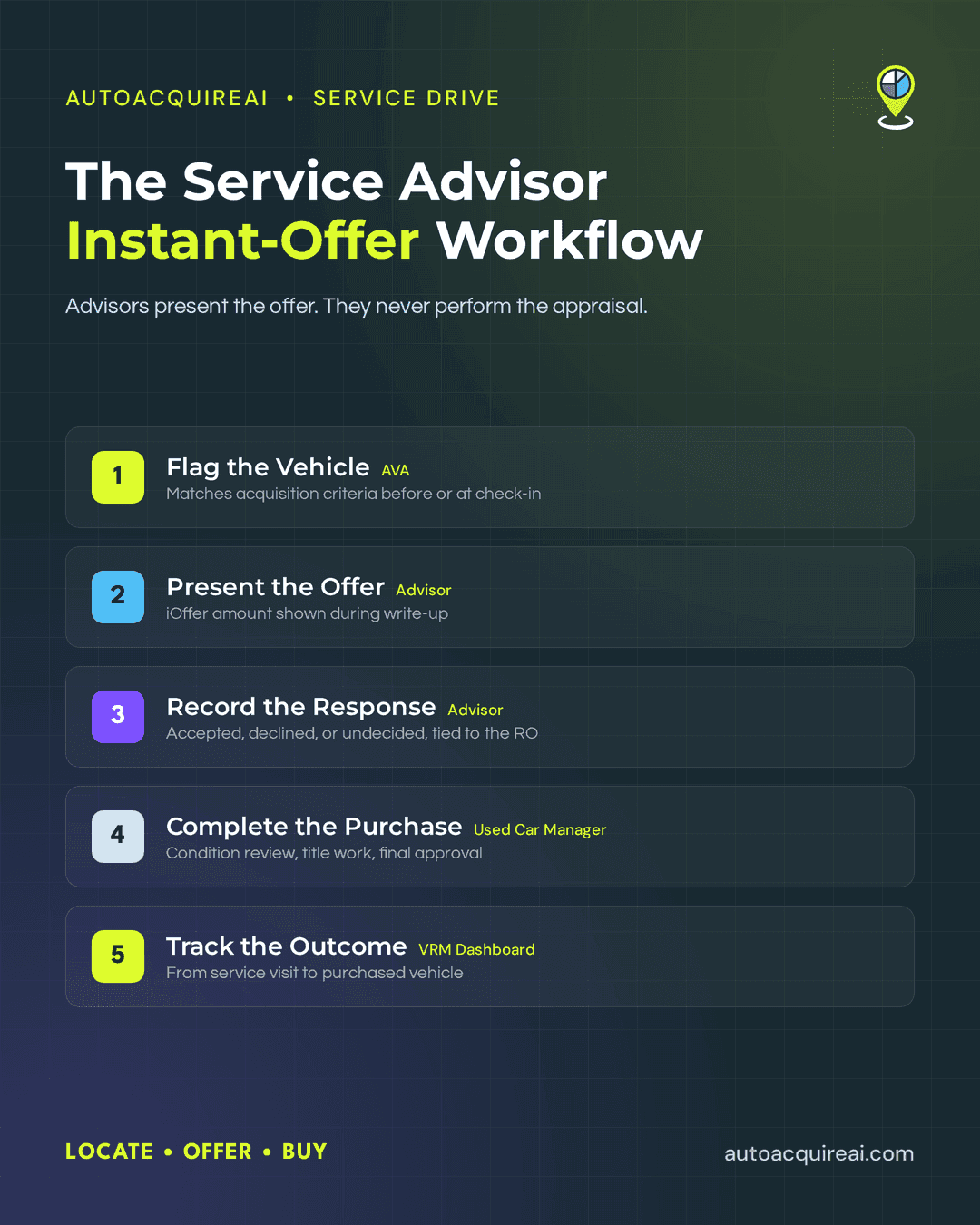
AutoAcquire sits above the DMS as an AI-native acquisition layer, sourcing used inventory directly from service drive customers and private sellers instead of managing cars a dealer already owns. Its AI agent, AVA, works service lane traffic and private-party seller leads, opening conversations and qualifying vehicles before a buyer ever picks up the phone. That sourcing focus separates AutoAcquire from vAuto, CDK, and Lotlinx, which price and turn existing stock but generate no new acquisition leads.
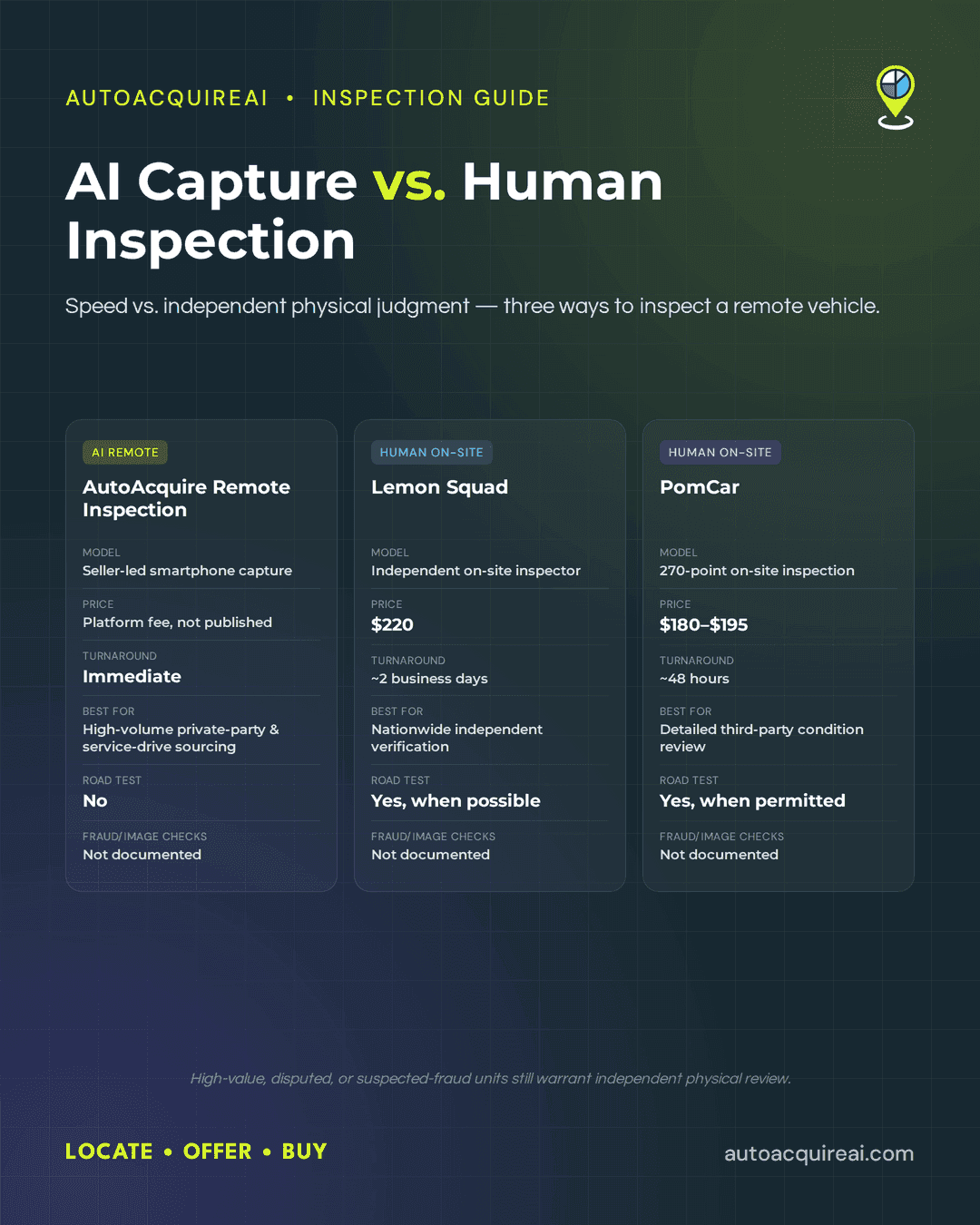
The iOffer instant cash offer product puts a firm number in front of a seller inside the workflow, so a service customer or private-party owner gets a real offer rather than a lead handoff. Paired with the Remote Inspection product, a dealer can appraise a vehicle without the car on the lot, which shortens the gap between first contact and a signed deal.
AutoAcquire connects to CDK, Reynolds, and Dealertrack through an open API, so acquired vehicles flow into a dealer's existing inventory and pricing stack without a rip-and-replace project. Dealers keep vAuto or Provision for turn optimization and add AutoAcquire to feed the top of that funnel with cars sourced outside the auction lane.
The full product suite covers AVA, iOffer, Remote Inspection, and the VRM Dashboard for tracking acquisition pipeline. Dealers in active markets, including Orlando, Tampa, Charlotte, Chicago, Dallas, and Phoenix, can run a 60-day free trial before committing, which lets a used-car manager measure acquisition volume against current auction spend.
Matching Tools to Dealer Type
Multi-franchise groups running multiple rooftops need vAuto for pricing discipline and CDK Inventory for native reporting across stores. Both scale with volume, and vAuto's Provision data keeps pricing consistent when a single manager can't watch every lot. Groups already standardized on CDK's DMS avoid the integration friction that comes from bolting a third-party inventory tool onto native reporting.
Independent used-car dealers get more value from Carketa and Lotlinx than from a heavy DMS-tied suite. Carketa keeps reconditioning moving and produces condition-based appraisals, while Lotlinx directs advertising spend at the specific VINs sitting too long. Neither requires a franchise-scale DMS commitment.
Multi-rooftop operators should choose the tool that reports cleanly across stores. CDK Inventory handles this natively for CDK dealers, and Dealertrack fits groups already inside the Cox Automotive ecosystem for lender connectivity and F&I.
Dealers cutting auction spend need an acquisition layer, not another management tool. AutoAcquire sits on top of the existing stack, using AVA and iOffer to help dealers source vehicles from service drive customers and private sellers. Management tools like vAuto and Lotlinx optimize inventory a dealer already owns. They don't bring cars in the door. Pairing an acquisition layer with a pricing tool covers both the sourcing gap and the turn side, which is the combination most auction-heavy dealers actually need.
Feature Checklist: What Each Tool Actually Covers
The table below strips each platform down to what it actually does, so dealers can spot gaps before committing to a contract. Pricing and management tools cluster at the top of the feature set, while sourcing capability sits almost entirely with AutoAcquire.
| Feature | vAuto | DealerSocket Inventory+ | CDK Inventory | Dealertrack DMS | Lotlinx | Carketa | AutoAcquire |
|---|---|---|---|---|---|---|---|
| Real-time market pricing | ✓ | ✓ | partial | — | ✓ | partial | — |
| DMS integration | ✓ | ✓ | ✓ | ✓ | partial | partial | ✓ |
| AI-powered turn optimization | ✓ | partial | — | — | ✓ | partial | — |
| AI-powered acquisition sourcing | — | — | — | — | — | — | ✓ |
| Service drive acquisition | — | — | — | — | — | — | ✓ |
| Instant cash offer / iOffer | — | — | — | — | — | — | ✓ |
| Household garage data | — | — | — | — | partial | — | ✓ |
| Bulk VIN lookup | ✓ | ✓ | ✓ | ✓ | ✓ | ✓ | ✓ |
| Multi-rooftop support | ✓ | ✓ | ✓ | ✓ | ✓ | partial | ✓ |
How to Choose the Right Dealership Inventory Management Software
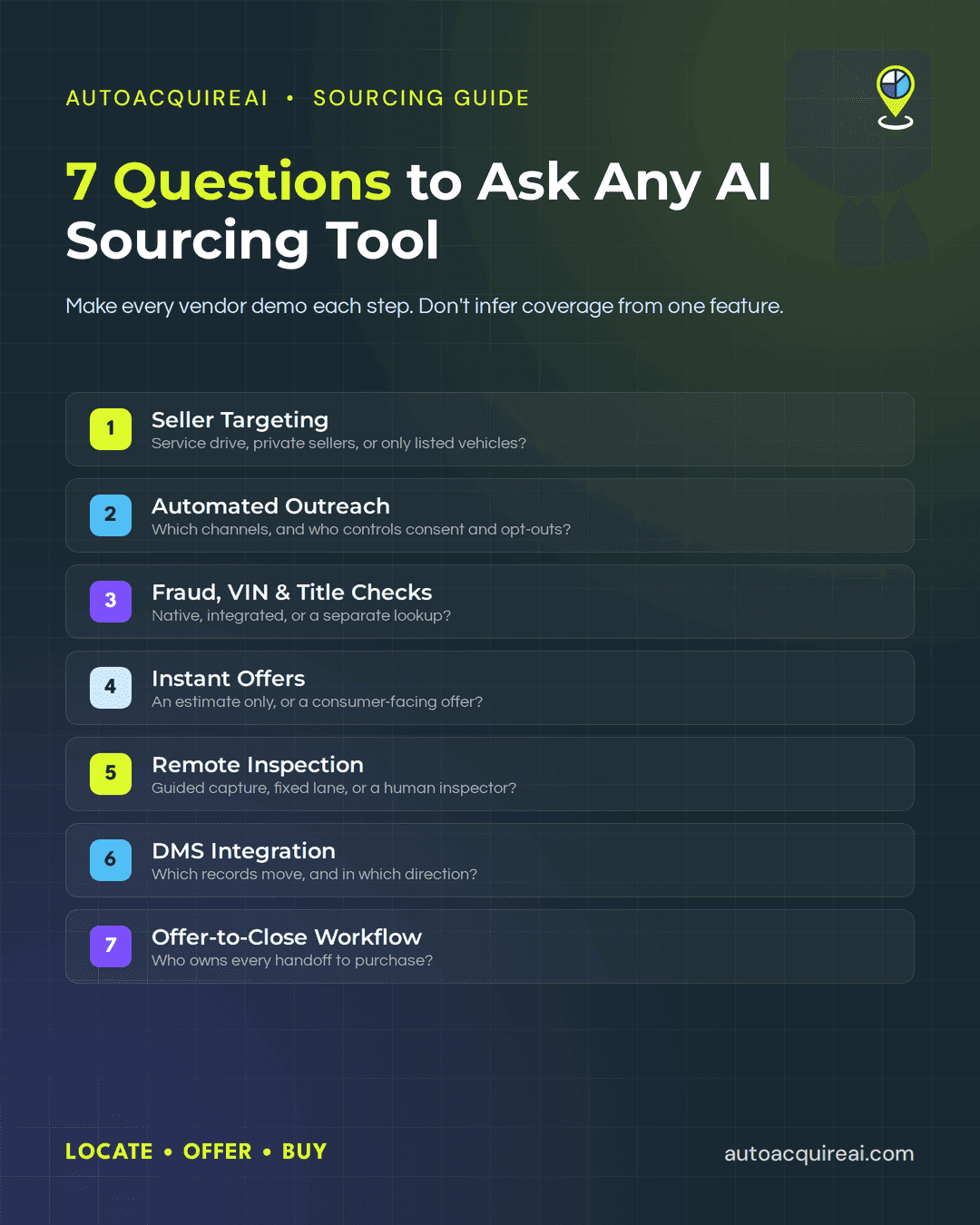
Start by naming the problem. Dealers struggling with pricing accuracy, aging units, and turn speed need a management tool like vAuto or Lotlinx. Dealers struggling to find used inventory without overpaying at auction need an acquisition tool like AutoAcquire. Most dealers eventually run both, but buying an acquisition platform to fix an aging problem wastes money, and the reverse leaves lots empty.
Check the DMS next. Dealers on CDK, Reynolds, or Dealertrack should confirm any new tool syncs cleanly, since integration friction kills adoption faster than any missing feature. AutoAcquire connects to all three through an open API, so the acquisition layer feeds appraisals and offers back into existing workflows.
Weigh auction spend as a cost driver. Dealers paying rising fees and transport on every purchase gain the most from direct service drive and private-seller sourcing.
Rooftop count settles the rest. Single-store operators can favor depth in one tool. Multi-rooftop groups need consolidated reporting and centralized appraisal, which narrows the field to platforms built for group-level visibility.
FAQ
What is the best dealership inventory management software in 2026?
The best software depends on the problem a dealer is solving, since the tools split between managing owned inventory and acquiring new units. For market pricing and turn optimization, vAuto remains the standard among franchise groups. For sourcing vehicles outside the auction lanes, AutoAcquire leads on direct acquisition through service drive customers and private sellers.
How does AutoAcquire differ from vAuto?
vAuto prices and manages inventory a dealer already owns. AutoAcquire acquires that inventory in the first place, using AVA to generate seller leads and iOffer to make instant cash offers. The two tools solve different problems, and most dealers run both.
Which inventory management tools integrate with CDK and Reynolds?
CDK Inventory integrates natively with CDK's DMS. AutoAcquire connects to CDK, Reynolds, and Dealertrack through an open API, so acquisition data flows into whichever DMS a dealer already runs without replacing it. Dealertrack DMS integrates natively within the Cox Automotive ecosystem.
What is the best tool for dealers who want to reduce auction fees?
AutoAcquire gives dealers the most direct path to cutting auction spend. Sourcing from service drive customers and private sellers eliminates buy fees, transport costs, and the condition surprises that come with auction purchases. The instant cash offer workflow closes direct deals on the spot, and a 60-day free trial is available in active markets.