

The Operator's Guide to Building a Scalable Inventory System
The most effective franchise dealers in today's market are not chasing inventory. They are building systems that produce it.
Direct acquisition from consumers has become the most important shift in dealership operations in the last decade. Dealers who execute it well are sourcing a significant portion of their inventory outside of auctions, improving margins, and gaining control over supply.
The question is no longer whether to build a direct acquisition strategy. The question is how to execute it at scale with consistency.
This guide outlines exactly how top performing dealers across the United States are doing it.
The Market Reality Every Dealer Must Understand
The wholesale market has fundamentally changed. Supply remains tight and competition continues to intensify.
Recent market data shows elevated pricing levels and compressed supply, creating a more aggressive buying environment for dealers.
At the same time, nearly forty percent of used vehicle transactions are happening between consumers. That is the largest available inventory pool in the market.
Dealers who continue to rely primarily on trade ins and auctions are competing for the most expensive vehicles with the least control. Dealers who shift upstream and acquire vehicles directly from consumers are positioning themselves ahead of that competition.
Why Direct From Consumer Acquisition Matters Now
There are three forces driving this shift.
First, access to inventory has changed. The majority of available vehicles are not sitting in auctions. They are sitting in driveways.
Second, the economics are stronger. Removing auction fees, transport costs, and wholesale premiums creates a measurable improvement in cost per unit.
Third, consumer behavior has evolved. Sellers expect a fast, digital experience with real pricing and immediate communication. If a dealership cannot deliver that experience, the seller will move to someone who can.
This is not about adding another lead source. This is about building a system that captures local sellers before they enter the broader market.
The Five Channel Framework Every Dealer Should Be Running
A complete acquisition strategy is built across five coordinated channels. The dealers who consistently hit their inventory targets are operating all five at the same time.
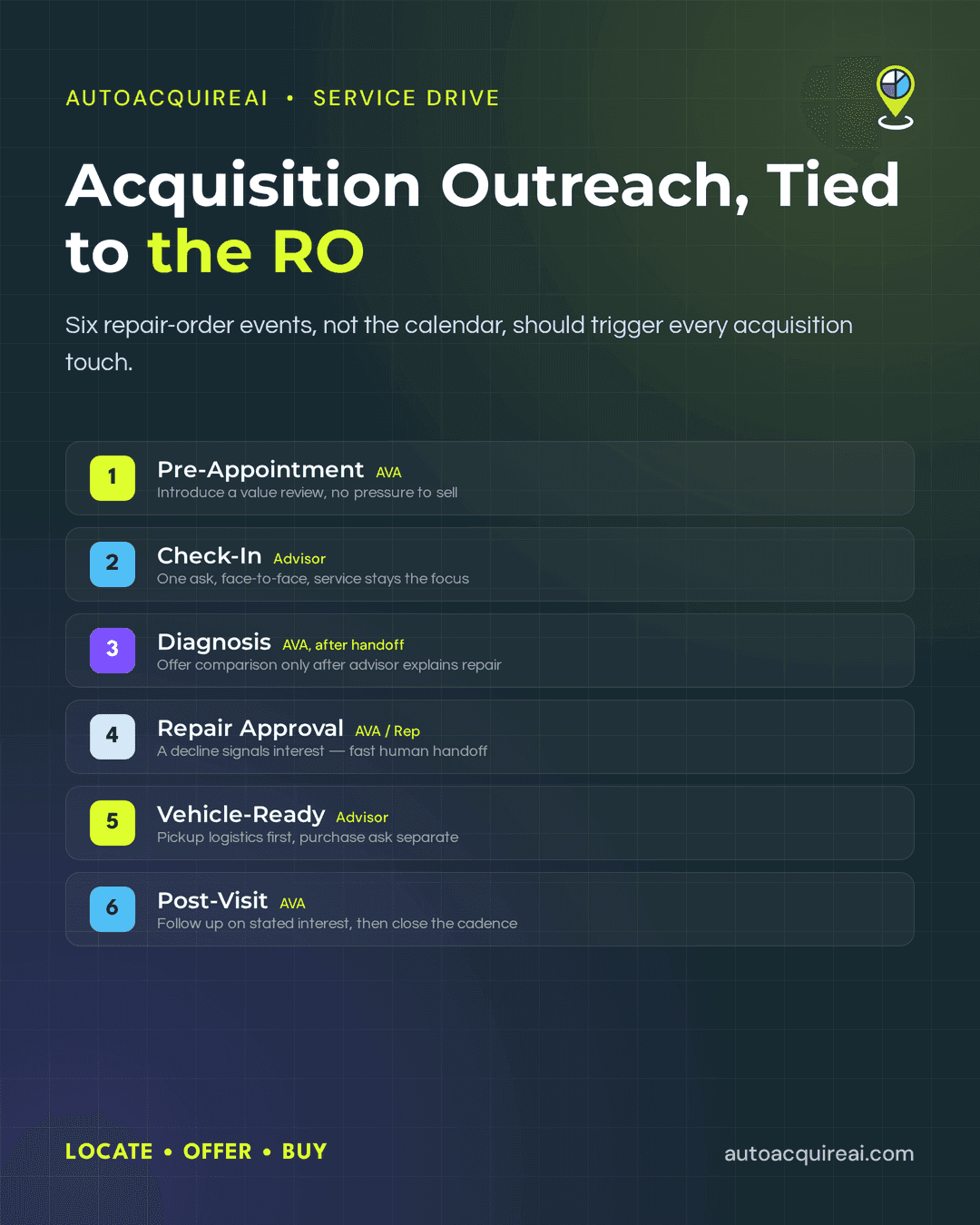
Service Drive Acquisition
The service drive remains the highest quality opportunity in the dealership. Customers are already engaged and often have vehicles that fit the store's needs.
Execution requires trained advisors, real time equity visibility, and immediate offer delivery during the visit.
When run correctly, this channel produces the highest conversion rates in the dealership.
Customer Database and Equity Mining
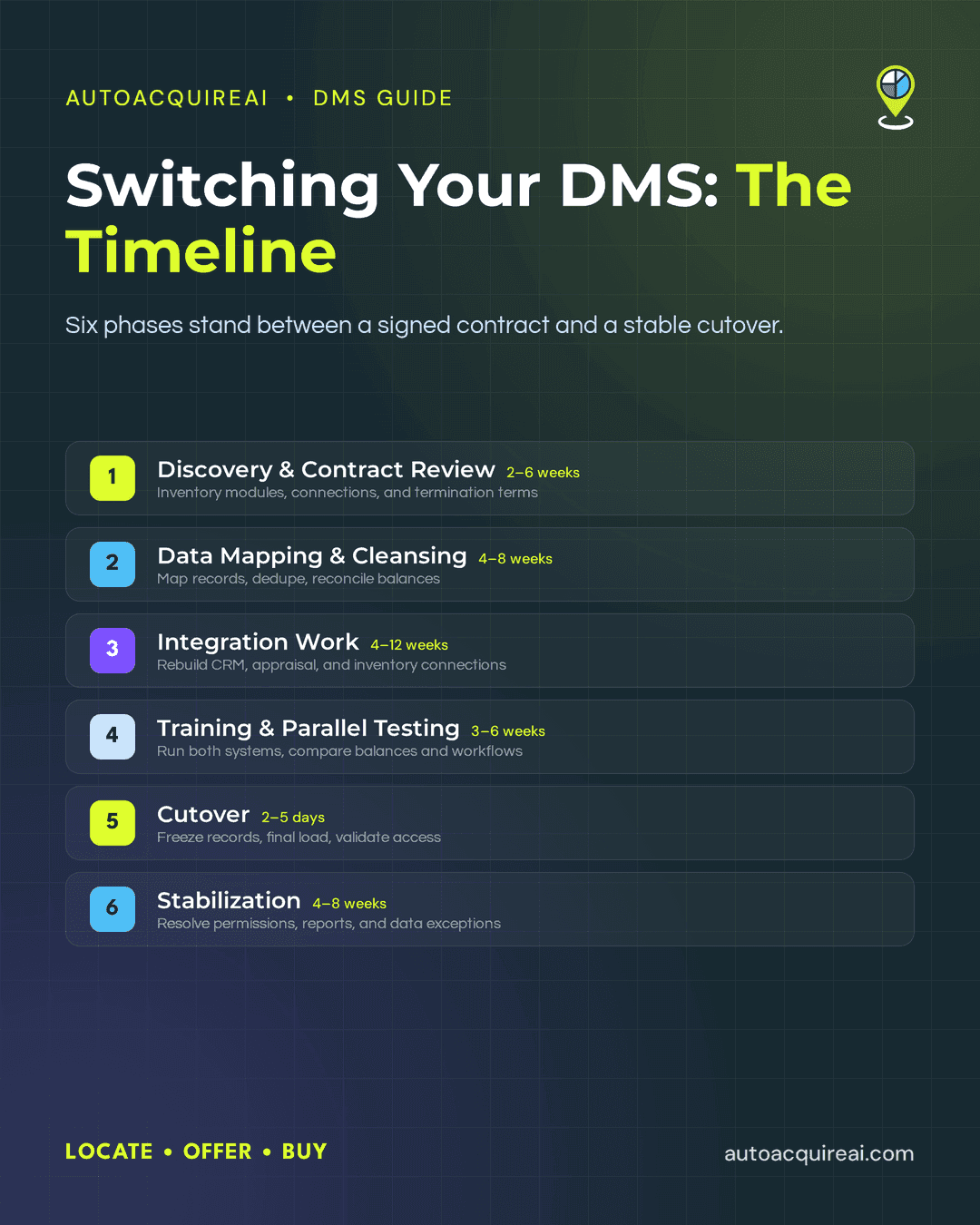
Your CRM and DMS represent one of the most underutilized acquisition opportunities.
Customers with equity, aging vehicles, or expiring terms are already positioned to sell. The advantage comes from identifying them early and engaging them with the right timing.
This channel becomes powerful when supported by automation and consistent outreach.
Digital and Website Acquisition
Every dealership website should function as an acquisition engine.
Customers expect to receive a real offer immediately. Any delay reduces conversion.
The experience must be simple, fast, and built to move the customer from curiosity to transaction without friction.
Private Party and Off Street Acquisition
This is the largest volume opportunity available.
Platforms like Facebook Marketplace and local listings represent millions of vehicles. The advantage is not access. It is execution.
Manual processes do not scale. Dealers who succeed in this channel use technology to identify the right vehicles, engage instantly, and manage transactions efficiently.
Auction and Wholesale
Auction still plays a role, but it is no longer the foundation of a strong acquisition strategy.
Top operators treat auction as a supplement. It fills specific gaps rather than driving the entire inventory plan.
The Technology Behind a Scalable Acquisition System
Running five channels requires more than effort. It requires the right infrastructure.
An effective acquisition system must deliver five capabilities at the same time.
- It must identify sellers before they enter the market
- It must price vehicles based on real time conditions
- It must engage customers immediately
- It must manage the transaction from start to finish
- It must allow the dealer to control pricing and strategy
Most dealerships attempt to achieve this by stacking multiple tools. This approach creates friction, delays, and lost opportunities.
A unified platform eliminates those gaps and allows the dealership to operate with consistency.
What an Integrated System Looks Like in Practice
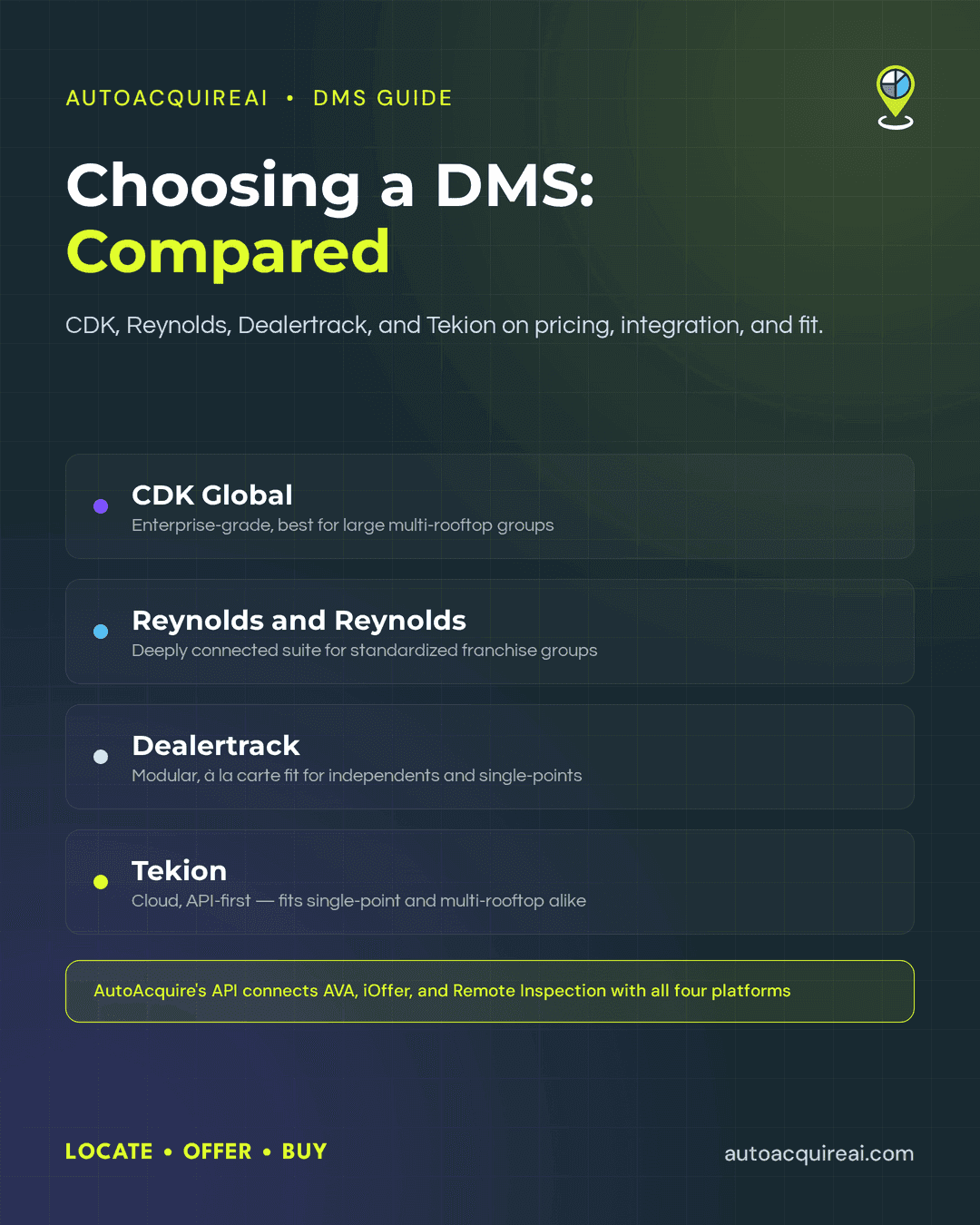
AutoAcquire AI was built to support this exact model.
It allows dealers to identify likely sellers, deliver real offers instantly, engage every opportunity immediately, and manage the entire transaction in one place.
The result is not just more inventory. It is better inventory acquired with greater control.
Dealers who operate within a single system are able to measure performance, adjust strategy, and scale without adding unnecessary complexity.
The Metrics That Separate Operators From Everyone Else
Acquisition is not about volume. It is about performance.
The most effective dealers track a defined set of metrics every week.
- Cost to market
- Win to retail spread
- Appraisal to purchase rate
- Days of supply by channel
- Response time
- Inventory alignment with sales pace
These metrics provide a clear view of what is working and where adjustments need to be made.
Dealers who track these consistently operate with intention. Dealers who do not operate reactively.
Where Most Dealers Get It Wrong
The same patterns show up repeatedly.
- Adding headcount before building a pipeline
- Relying only on inbound opportunities
- Using static pricing that does not adjust to the market
- Responding too slowly to customer inquiries
- Treating acquisition as a short term initiative instead of a daily operation
The difference between success and failure in this model comes down to execution and consistency.
A Practical 90 Day Implementation Approach
The strongest programs are built with discipline.
In the first thirty days, dealers need to understand their current acquisition mix and establish baseline metrics.
In the next thirty days, they deploy the right technology and begin running all five channels.
In the final thirty days, they refine the process, adjust pricing, and focus on the channels producing the best results.
By the end of ninety days, the program should be producing measurable and repeatable inventory flow.
Frequently Asked Questions
How much inventory should come from direct consumer acquisition?
Top performing franchise dealers are sourcing a significant portion of their inventory directly from consumers.
How long does it take to build a working system?
A disciplined approach produces results within ninety days, with full maturity developing over time.
What is the biggest advantage of this strategy?
Control. Dealers gain control over cost, inventory quality, and supply instead of relying on external channels.
Do smaller dealerships benefit from this approach?
Yes. In many cases, smaller operations benefit even more because a unified system reduces operational complexity.
The Bottom Line
Inventory is the foundation of dealership performance.
The dealers who lead their markets are not relying on auctions to determine their success. They are building systems that consistently deliver the right vehicles at the right time.
Direct acquisition from consumers is no longer optional. It is a requirement for dealers who want to compete at a high level.
The dealers who execute this strategy today will define their markets for the next decade.
About the Author
Frank Knox serves as Chief Operating Officer of AutoAcquire AI and Vice President of Unique Auto Sourcing. He has spent his career in vehicle acquisition, wholesale strategy, and dealership operations, working directly with dealers to build scalable inventory systems.
Sources and further reading
- Cox Automotive, Manheim Used Vehicle Value Index — March 2026 Trends (April 7, 2026)
- Cox Automotive, Q1 2026 MUVVI Report and 2026 Outlook
- Cox Automotive, Manheim Insights
- BCG, 2025 Dealer Survey on Used Inventory Pain Points
- VETTX, "Dealer Group Acquisition Strategies for 2025"
- AutoSuccess, "Technology-Driven Acquisition Strategies" (2025)
- ACV Max, "Used Vehicle Sourcing for Dealers" (2025)
- CDK Global, "How Dealership Inventory Management Tools Assist in Uncertain Markets" (2025)